Getting to Agglestone Rock: The rock can only be reached on foot.
-
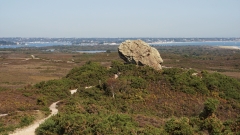
Route 1 (From Studland): Park at the Middle Beach Car Park (BH19 3AX). Walk back past the Studland Stores towards Agglestone Road, which turns into a track leading onto Godlingston Heath. Keep to the path, turn right at the gravel track crossroads, and head straight for the rock. This makes for a beautiful 1.5-hour circular walk.
-
Route 2 (The Quicker Route): Alternatively, park in the small lay-by on the B3351 (Corfe-Studland road), just past the Isle of Purbeck Golf Club (BH19 3AB). A public bridleway with waymarkers leads directly through the heath to the rock. Note: Take extreme care when parking or walking near this fast, narrow road.
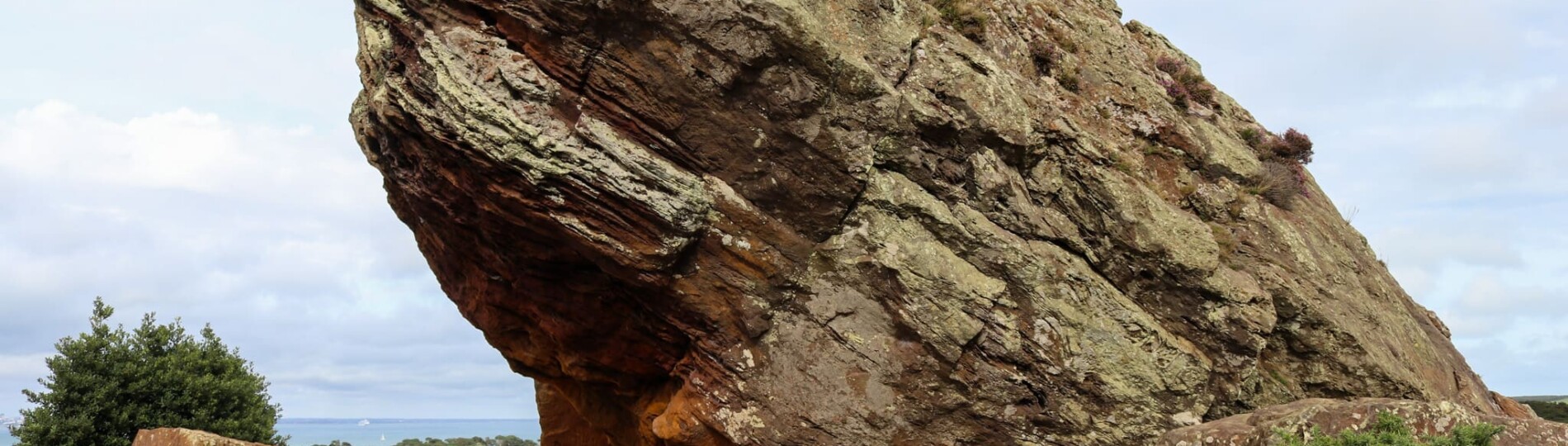
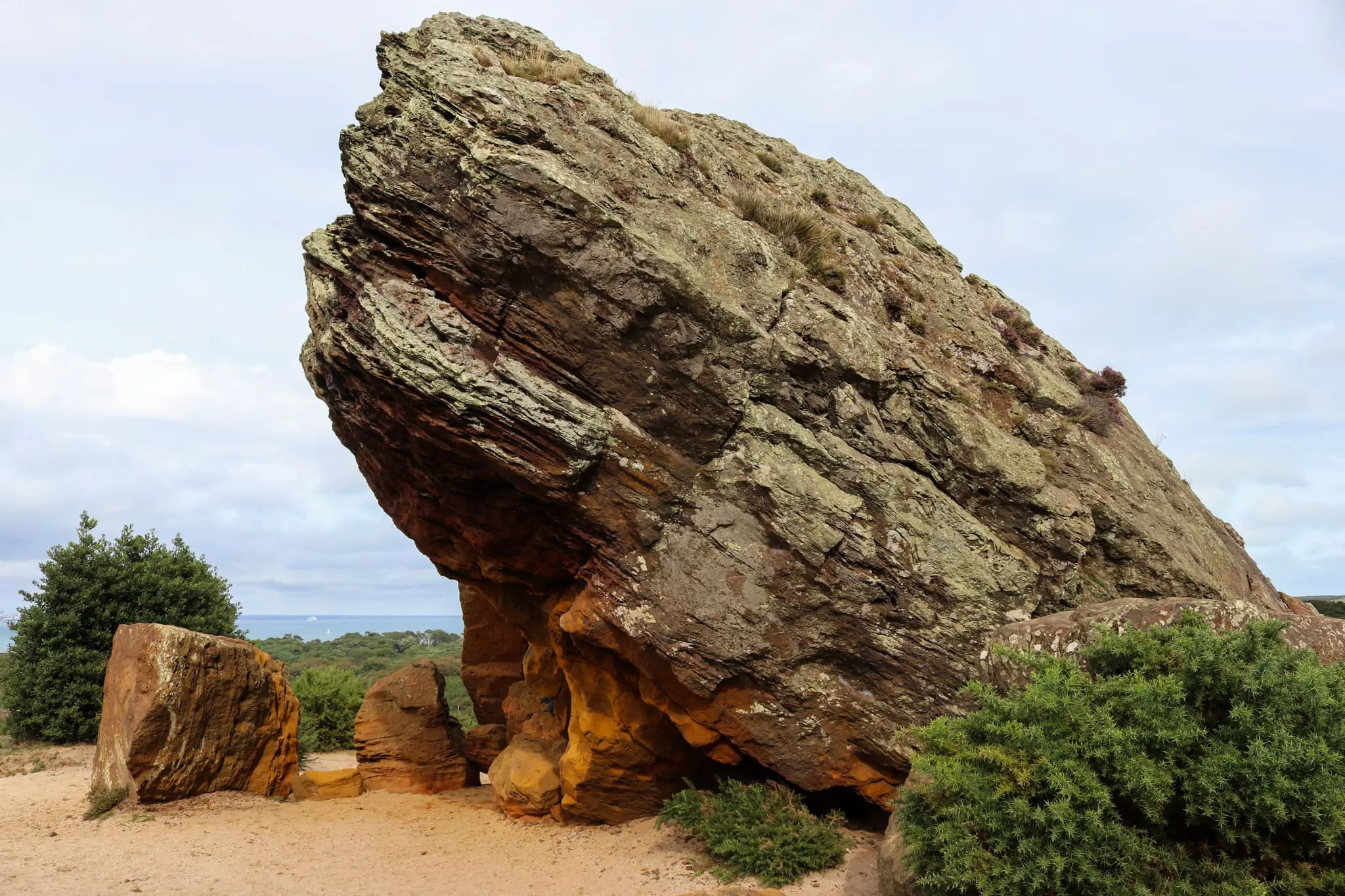
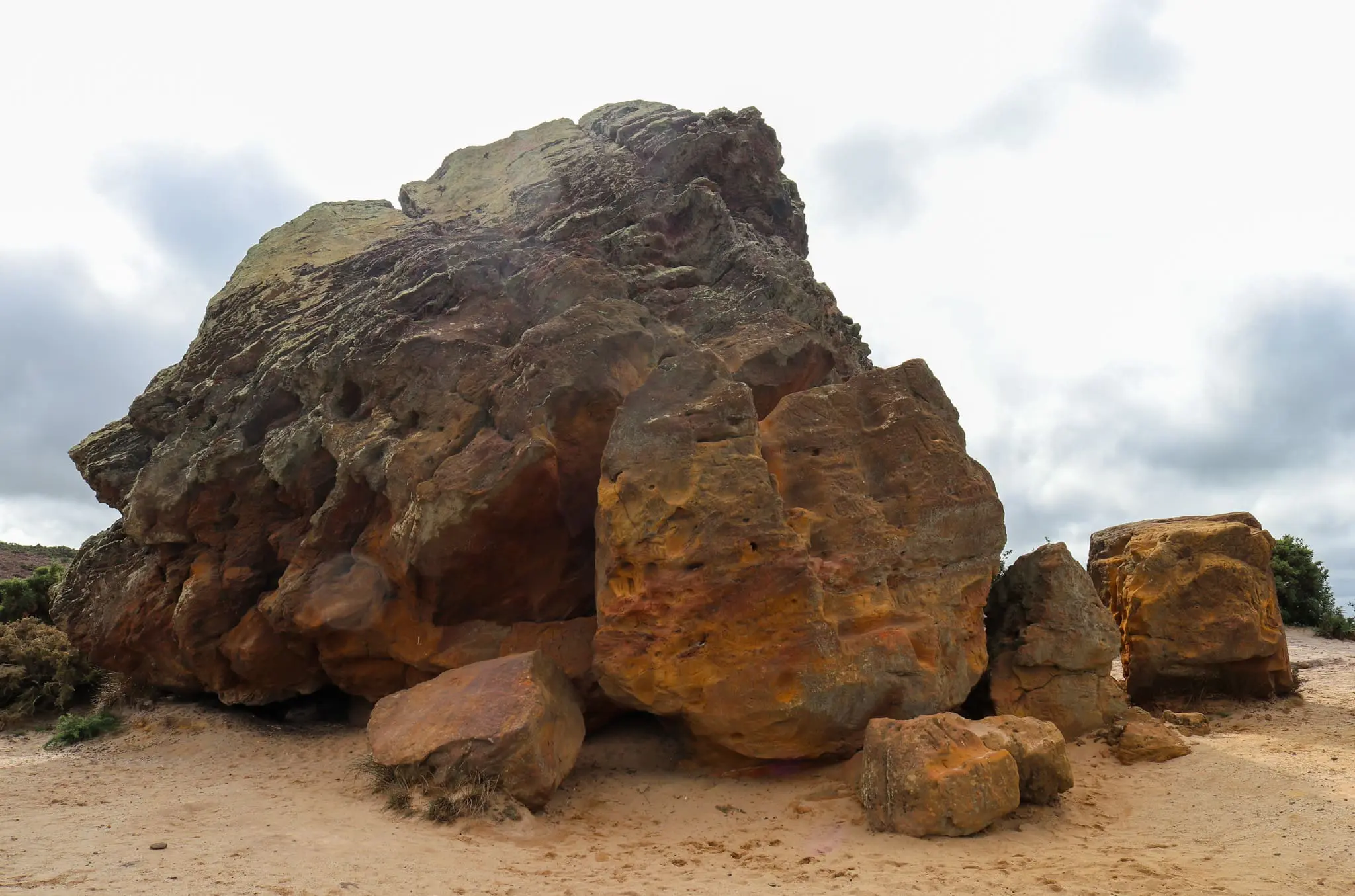
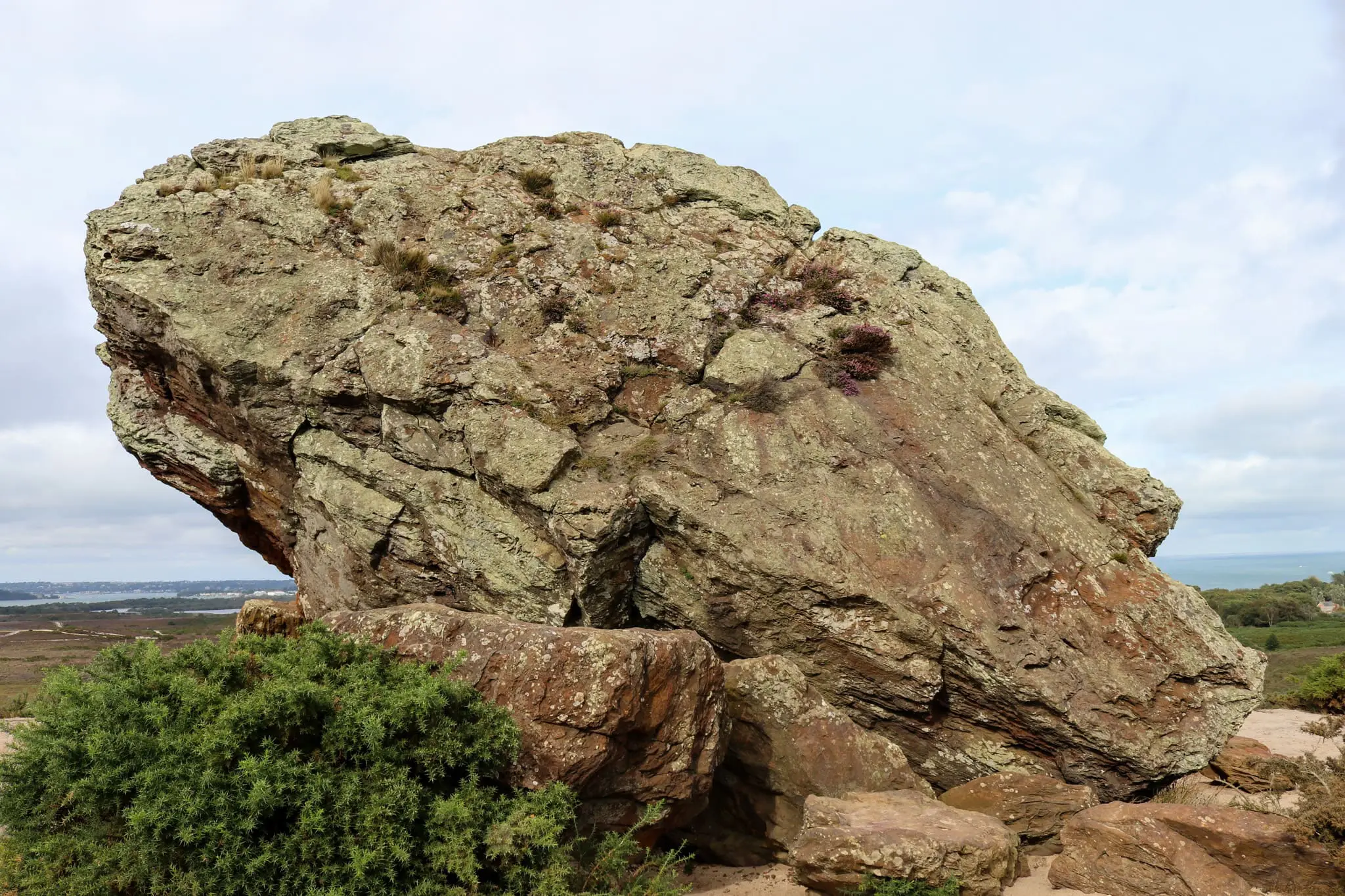
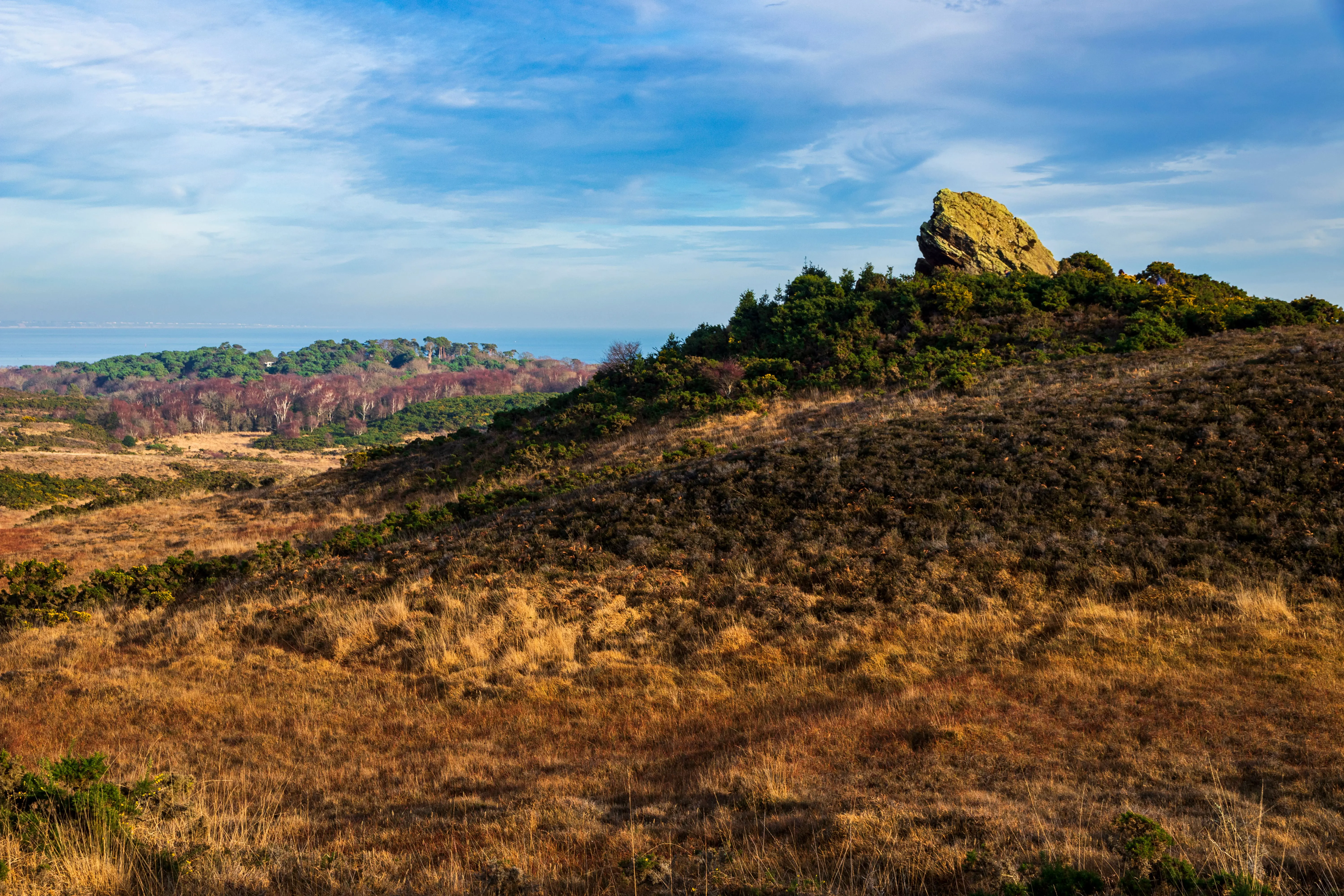
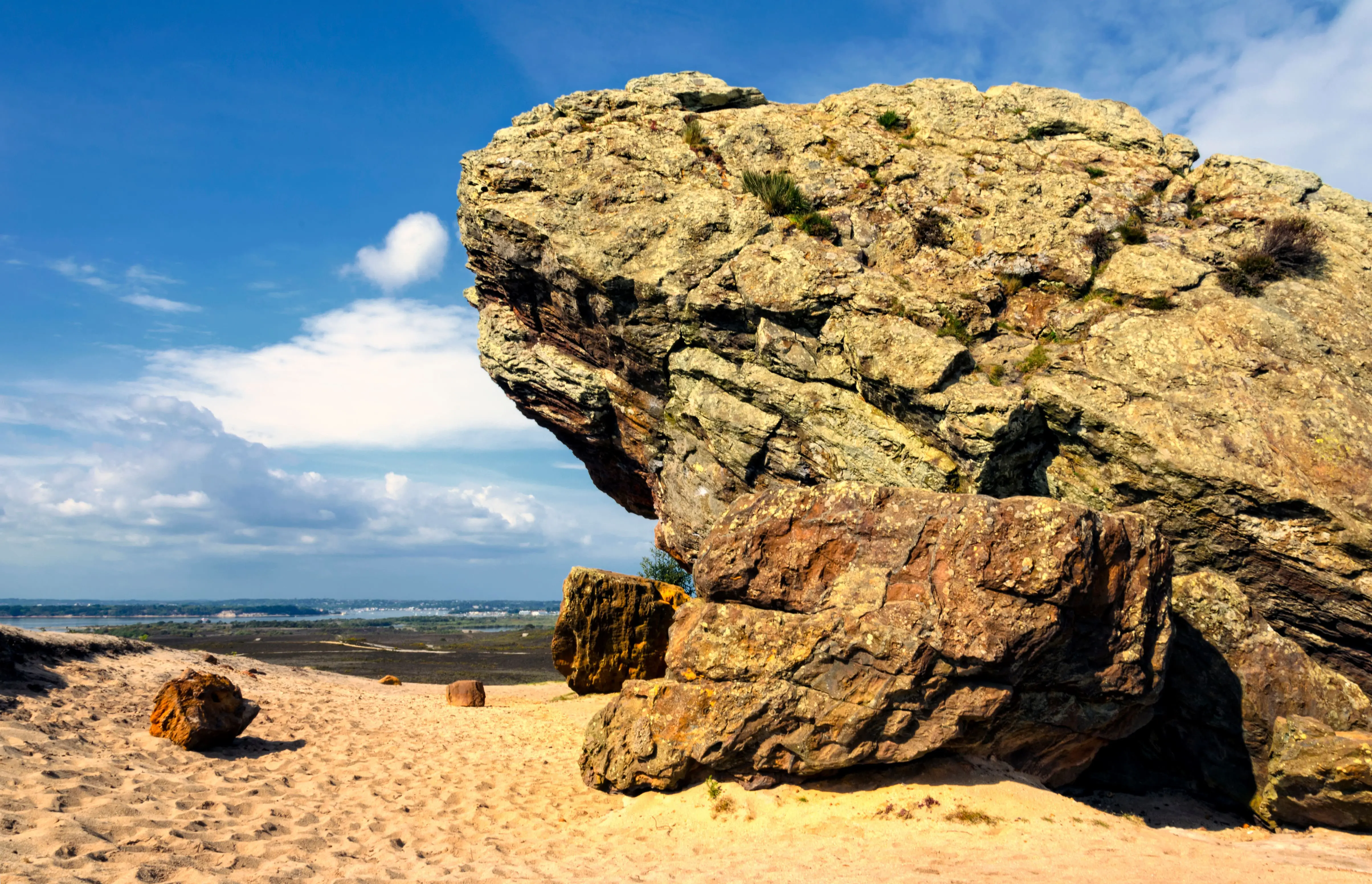
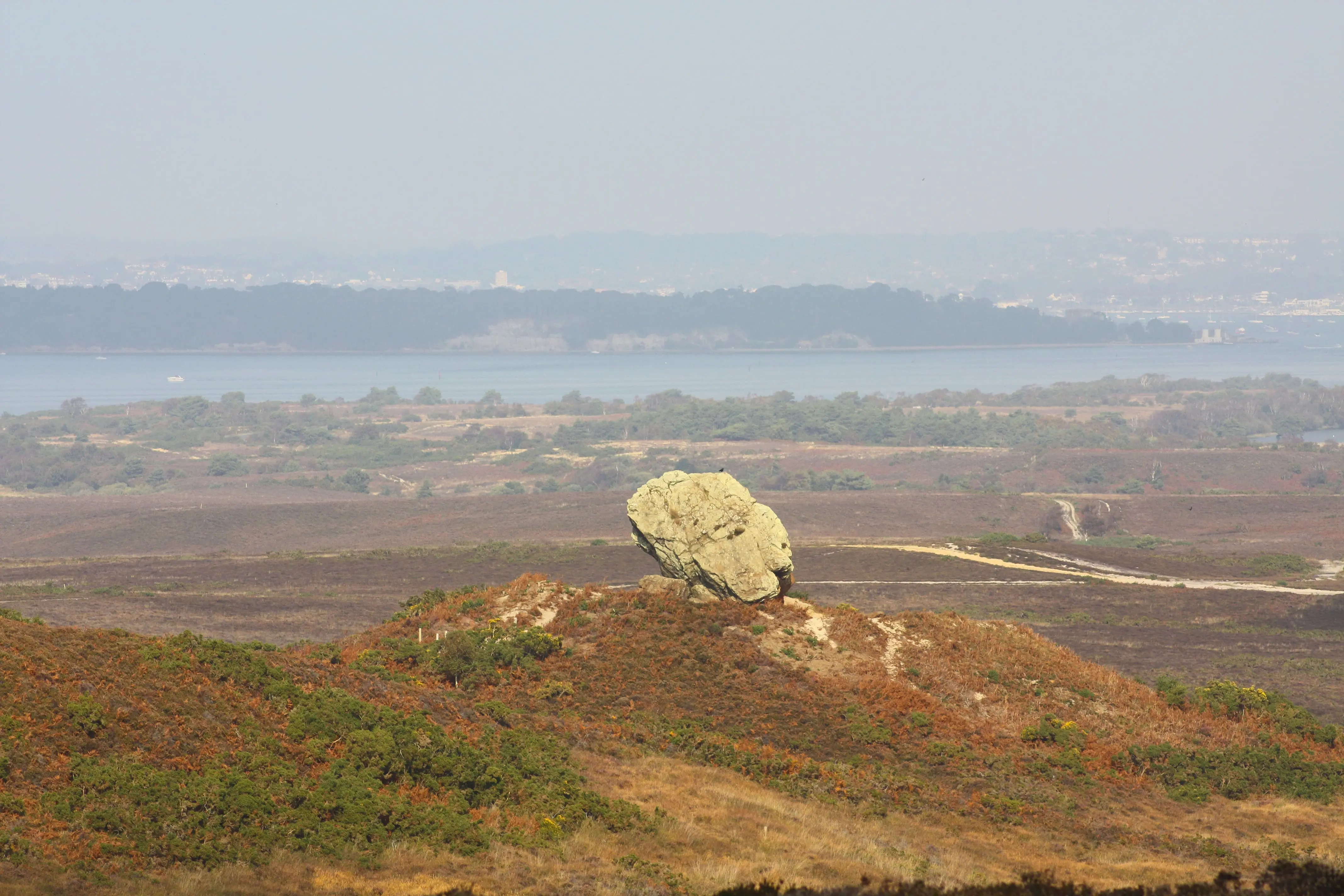
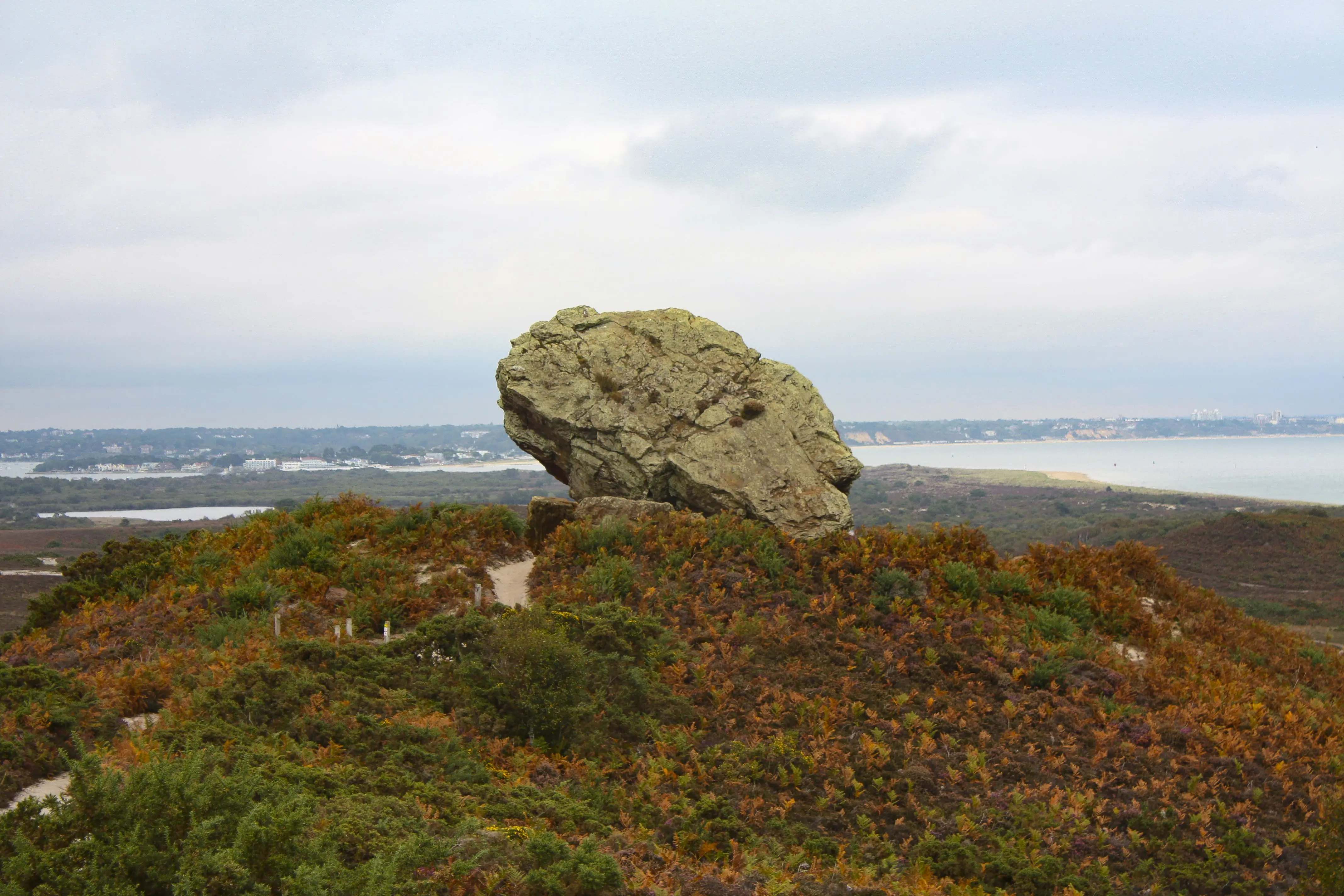
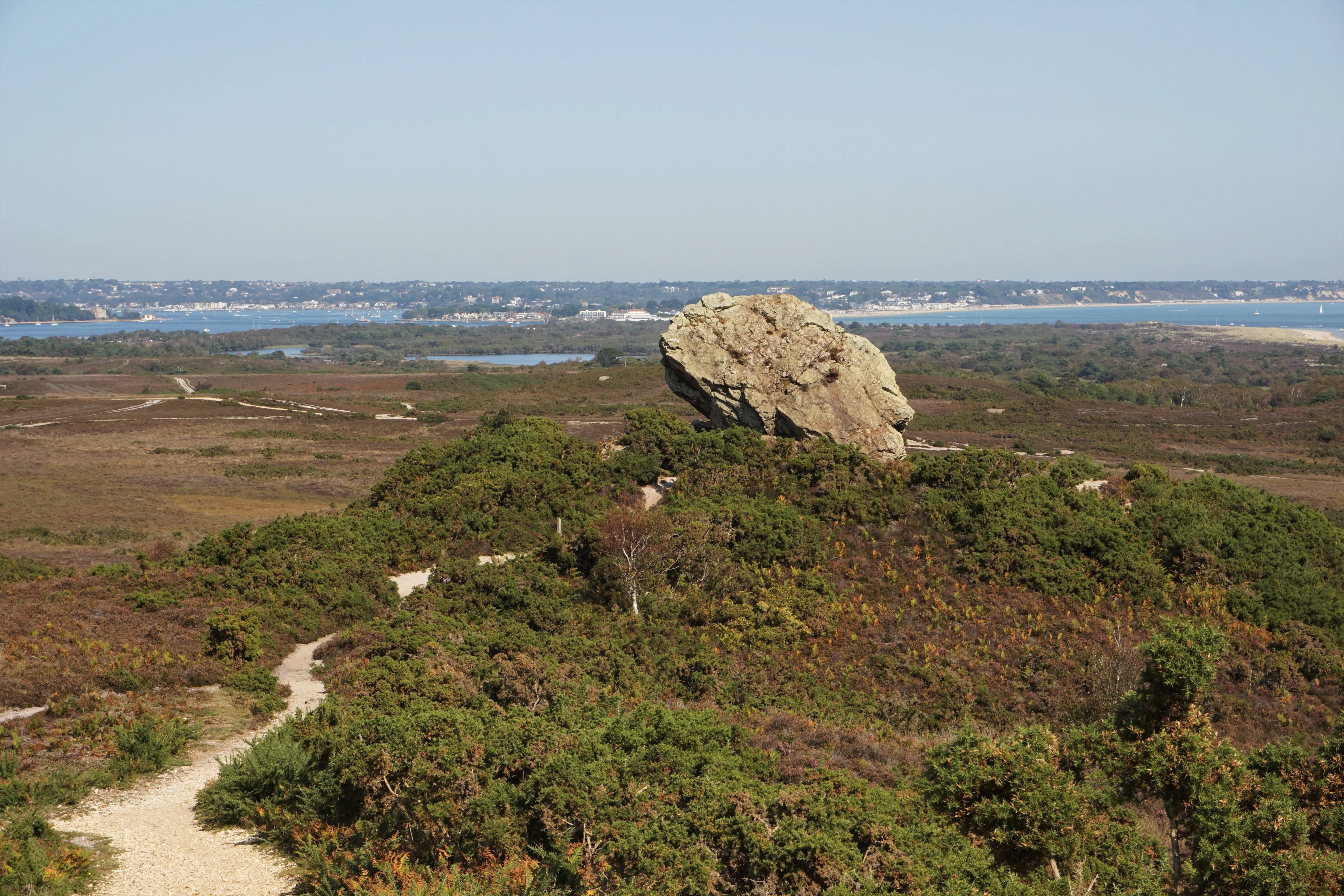
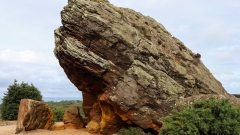
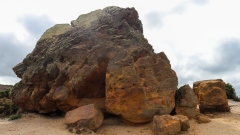
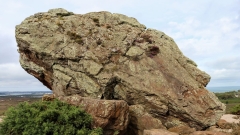
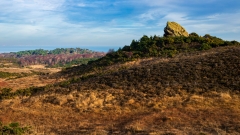
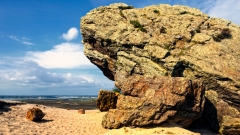
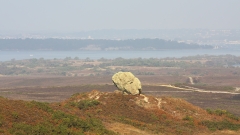
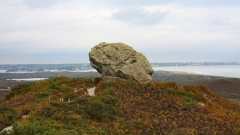
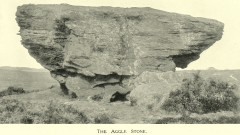
A colossal, 400-tonne sandstone rock offering 360-degree views of the Thomas Hardy-esque landscape.
It is a popular spot for walkers, cyclists, and occasionally rock climbers. There are no facilities, cafes, or toilets on the heath itself, so bring plenty of water and your camera.
The paths across the heath are unpaved, sandy, gravelly, and can become quite boggy in the dips after heavy rain.
Because of this rugged natural terrain, the route is not suitable for standard pushchairs or wheelchairs.
The heathland and the rock are open to the public 24 hours a day, 365 days a year, and are completely free to visit.
Daylight hours are highly recommended to safely navigate the heathland trails and appreciate the sweeping coastal views.
Perfect for
Map Directions
THE DEVIL’S ANVIL & ANCIENT MYTHS
How did a 400-tonne, iron-rich sandstone boulder end up sitting entirely alone on a Purbeck hill? The most famous legend claims it is the “Devil’s Anvil.” The story goes that the Devil himself threw the massive rock from The Needles on the Isle of Wight. Enraged and jealous of the impressive local architecture, he aimed for Corfe Castle, Salisbury Cathedral, or Bindon Abbey, but the immense weight caused it to fall short, turning to stone on the heath.
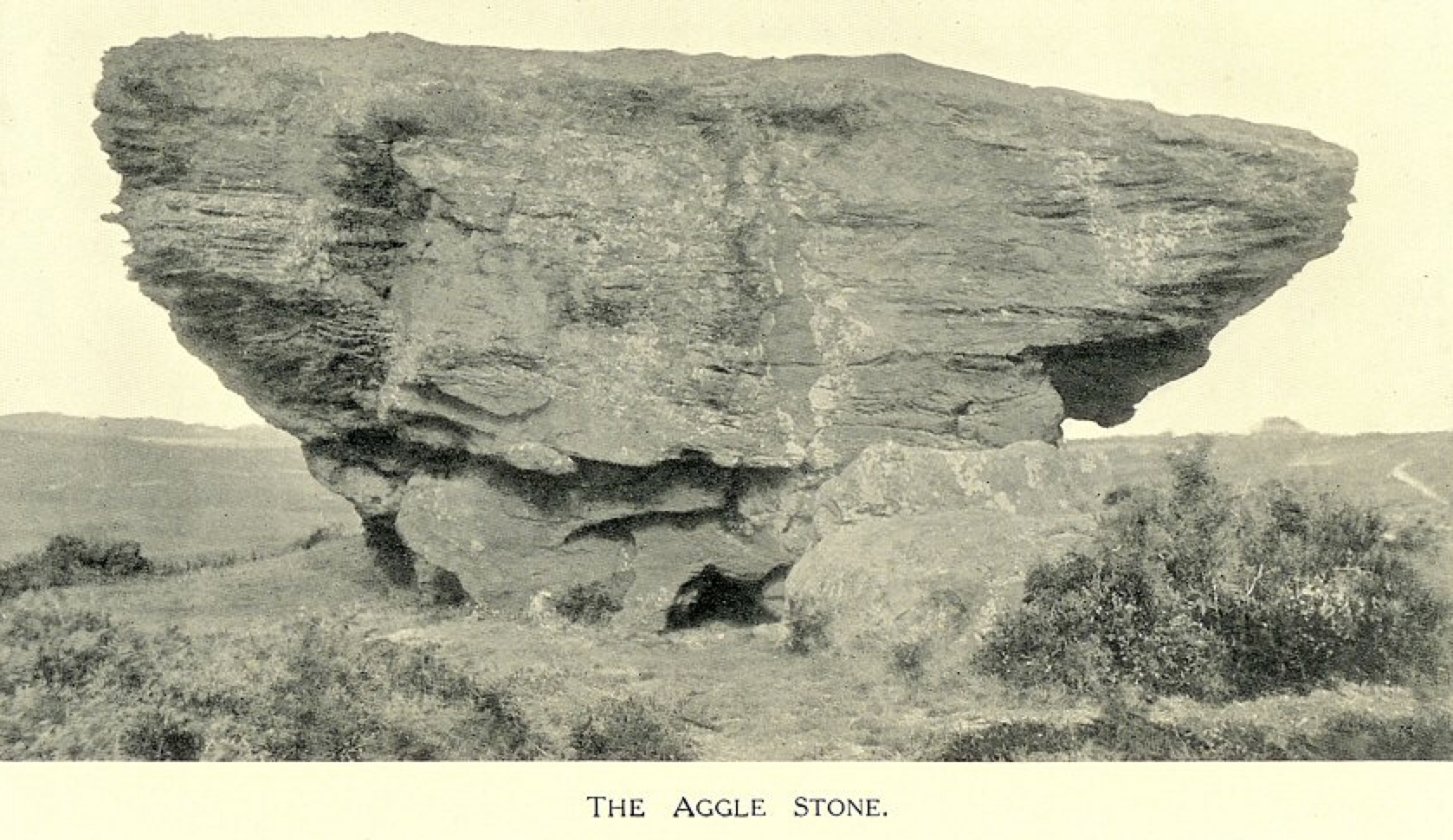
Other stories suggest a pagan history. Before the rock succumbed to the elements and toppled onto its side (falling to the south-east), it had a much flatter, anvil-like surface that was said to have been used as an altar by ancient Druids. Even its name is a mystery, with some believing it derives from the Anglo-Saxon words hagge (meaning ‘witch’) and stan (meaning ‘stone’), or from the Saxon halig-han meaning ‘Holy home’.
A QUARRYING RELIC OR NATURAL WONDER?
While geologists widely agree that it is a natural feature of the landscape—left behind as softer surrounding earth eroded away—there is evidence of human intervention. Its unique shape suggests it may have been subjected to minor quarrying, or perhaps it was intentionally left as a landscape relic by quarrymen, similar to the St Aldhelm’s Head monolith further down the coast. Today, it bears the carved initials of centuries of visitors, though modern explorers are urged to treat this spectacular piece of history with respect.
EXPLORING GODLINGSTON HEATH
The rock sits within the National Trust-managed Studland Nature Reserve, which forms part of the newly created Purbeck Heaths ‘super’ nature reserve—one of the most biodiverse areas in the UK. Depending on the season, the surrounding heathland is carpeted in swathes of purple heather and yellow gorse. Wildlife lovers should tread quietly, as this specific habitat is famously home to all six of the UK’s native reptile species, including the rare sand lizard.

Make it a holiday to remember!
Planning to visit Agglestone Rock during your stay? Ensure you have the perfect coastal basecamp to return to…
From affordable local hotels to luxury beachfront apartments on the Sandbanks peninsula and family-friendly cottages in Poole, browse our hand-picked collection of premium holiday stays. Wake up to spectacular sea views and experience Dorset at your own pace.
Browse All Places to Stay