The Great Sandbanks Top-Up: A Guide to Beach Nourishment
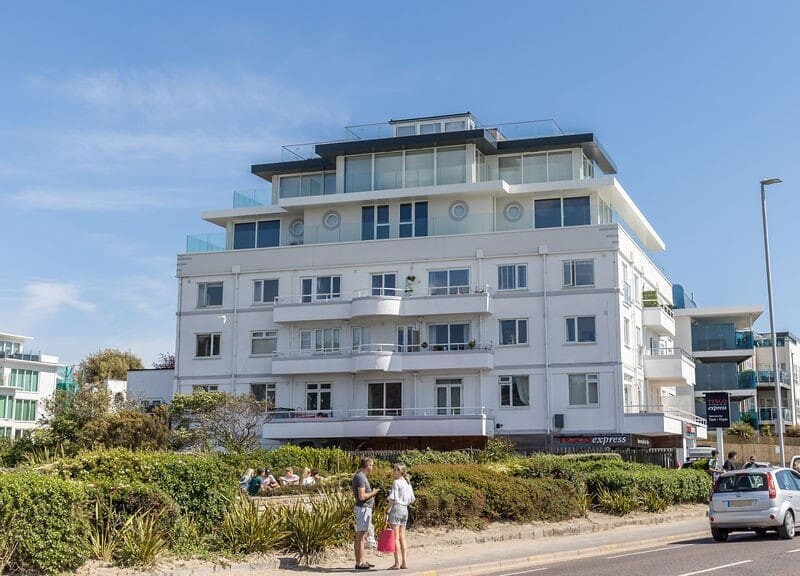
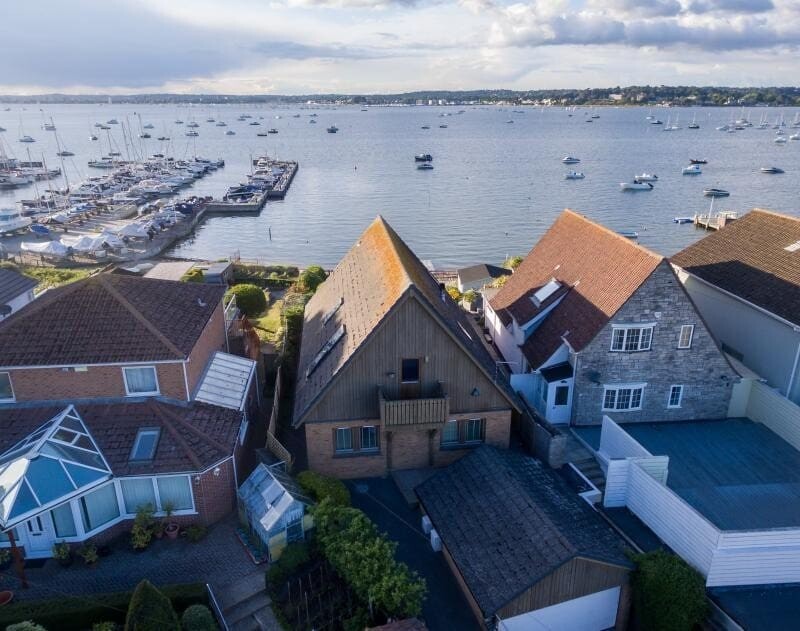
With its pristine golden sands and multi-million-pound waterfront homes, Sandbanks is the jewel in the crown of the Dorset coastline. But without constant human intervention, this world-famous peninsula and the wider Poole Bay would look very different today. Welcome to the fascinating world of beach nourishment.
Holding the Line: Why Sandbanks Needs Saving
The beautiful 18km stretch of coastline from Hengistbury Head in the east to the Sandbanks peninsula in the west is built on a naturally eroding landscape. Historically, the beaches were constantly topped up by sand falling from the natural erosion of the nearby cliffs.
However, over the last century, seawalls and promenades were built to protect cliff-top properties and infrastructure. While this stopped the cliffs from collapsing, it also cut off the natural supply of sand to the beaches. Without human intervention to replace this lost material, the sea would erode the coastline by up to 1 metre every single year, eventually washing away the beaches, the promenade, and the properties behind it.
The £50 Million Masterplan
To combat this, the BCP Council, in partnership with the Environment Agency and DEFRA (Department for Environment, Food & Rural Affairs), launched the Poole Bay Beach Management Scheme. Running from 2015 to 2032, this massive £50 million project is designed to protect the coastline from flooding and extreme storm events for the next 100 years.
The project relies on a two-pronged “Hold the Line” defence strategy:
- Cyclic Beach Renourishment: Replacing lost sand every few years to act as a primary shock absorber against crashing waves.
- Timber Groyne Renewal: Replacing life-expired wooden barriers along the beach to stop the new sand from washing away.
How Beach Nourishment Actually Works
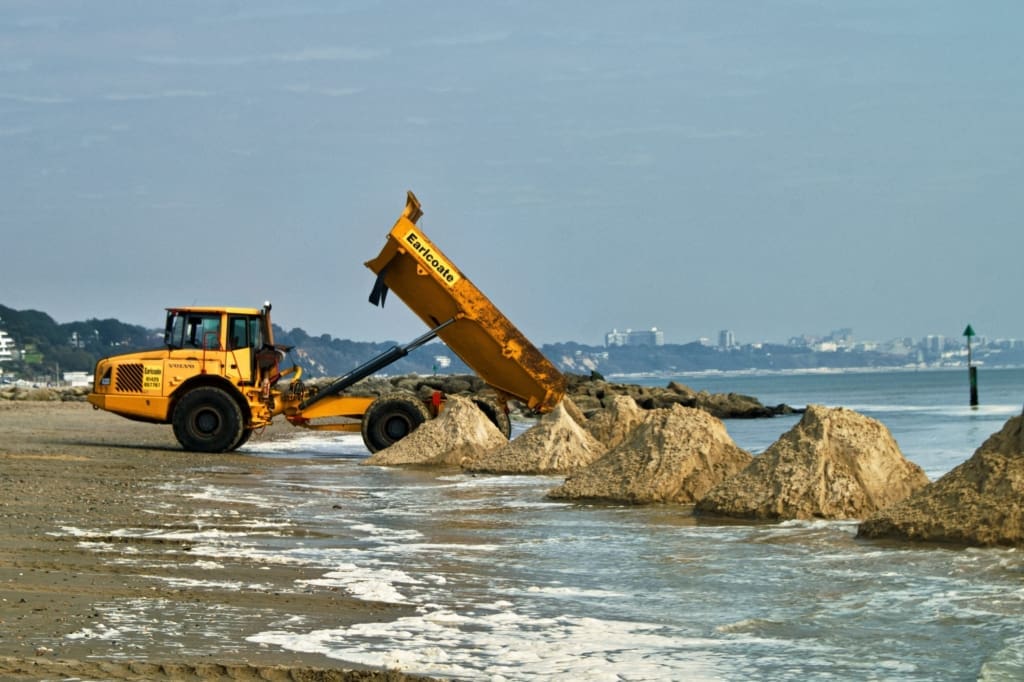
You may have occasionally seen massive pipes on Sandbanks or Bournemouth beach spewing out thousands of tonnes of sand. This is renourishment in action.
Because BCP Council needs hundreds of thousands of cubic metres of sand, they cannot simply dig it up from elsewhere on land. Instead, specialist dredger ships extract marine sand from licensed offshore zones (often south of the Isle of Wight). This sand is carefully selected to closely match the native, natural sand of Poole Bay.
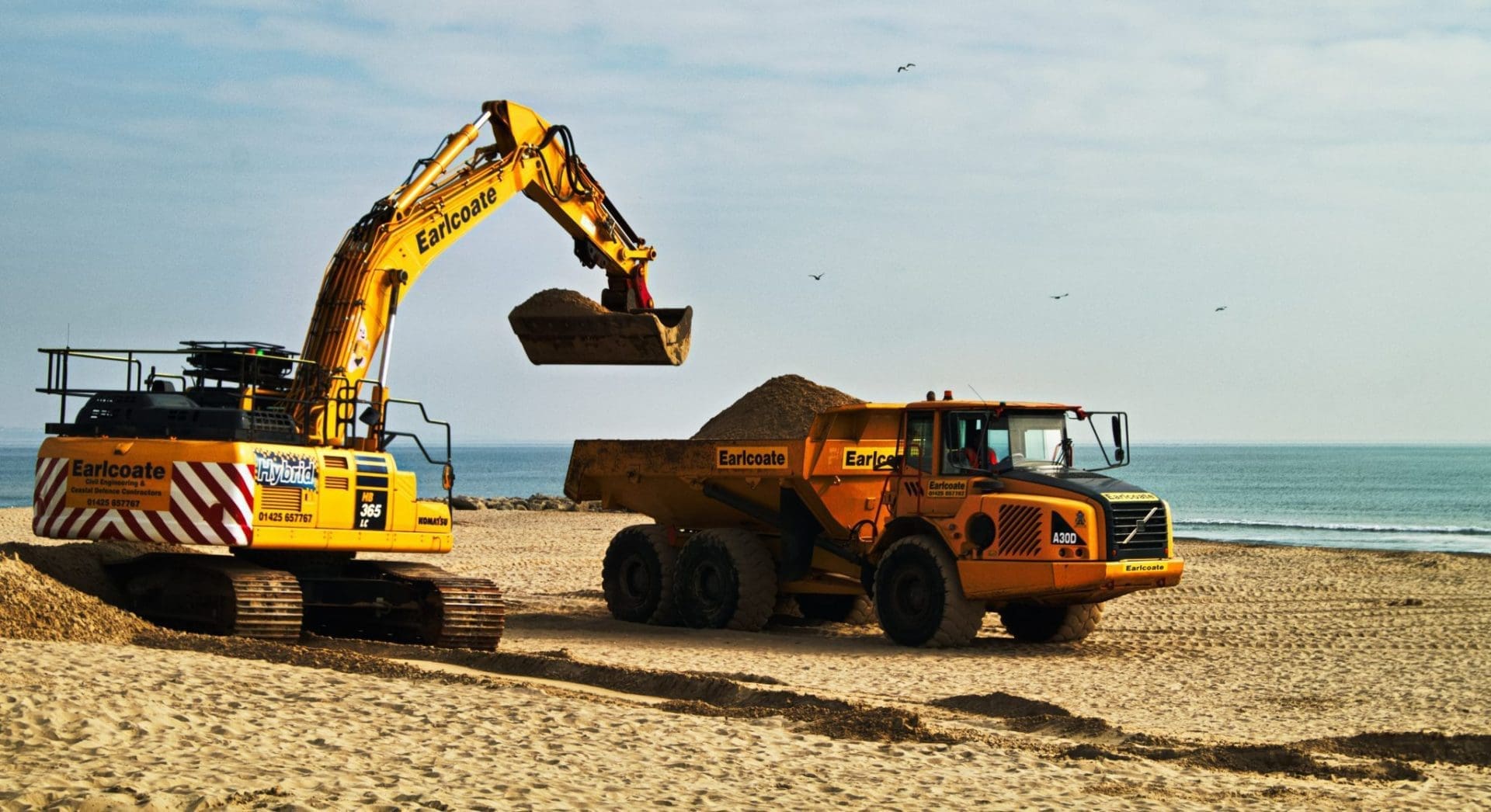
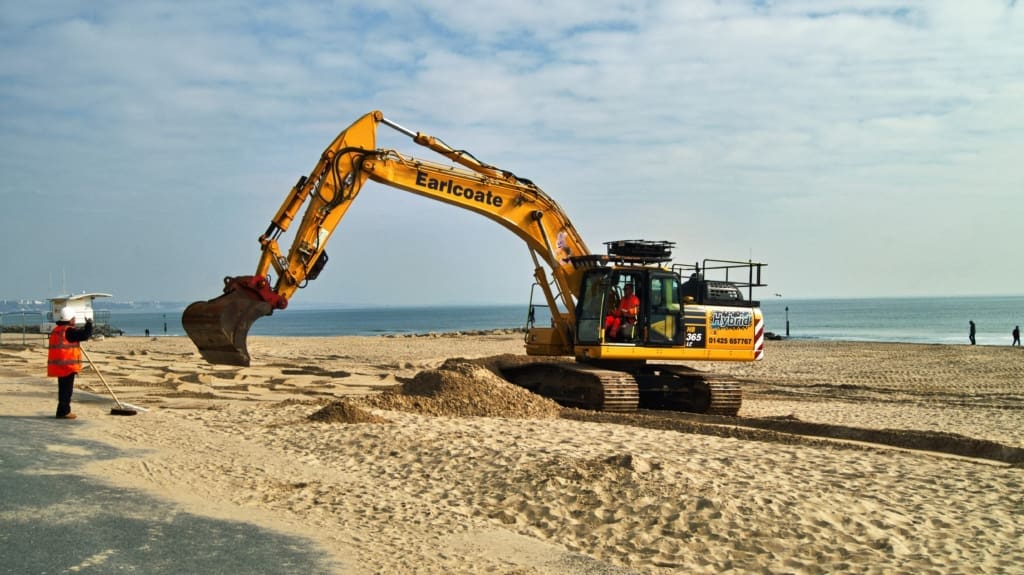
The dredger anchors offshore and connects to a massive pipeline on the beach. A slurry of sand and seawater is pumped ashore, where a fleet of heavy bulldozers works around the clock to shape it into a perfectly profiled, storm-resilient beach.
The Unsung Heroes: Timber Groynes
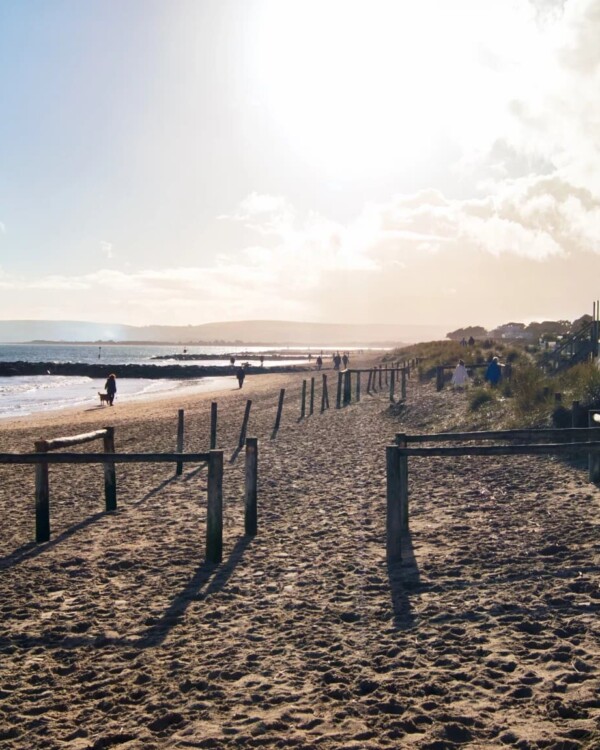
Pumping sand onto the beach is incredibly expensive, so the council needs to keep it there for as long as possible. That is where the timber groynes come in.
A natural coastal process called longshore drift constantly tries to drag sand from west to east across Poole Bay. The heavy wooden groynes act as massive speed bumps, interrupting the waves and trapping the sand before it can drift away. BCP Council is currently renewing all 56 groynes across the bay, driving 5-metre-deep vertical timber piles into the underlying clay to ensure they last for the next 25 years.
DEFRA’s Innovative Nearshore Trials
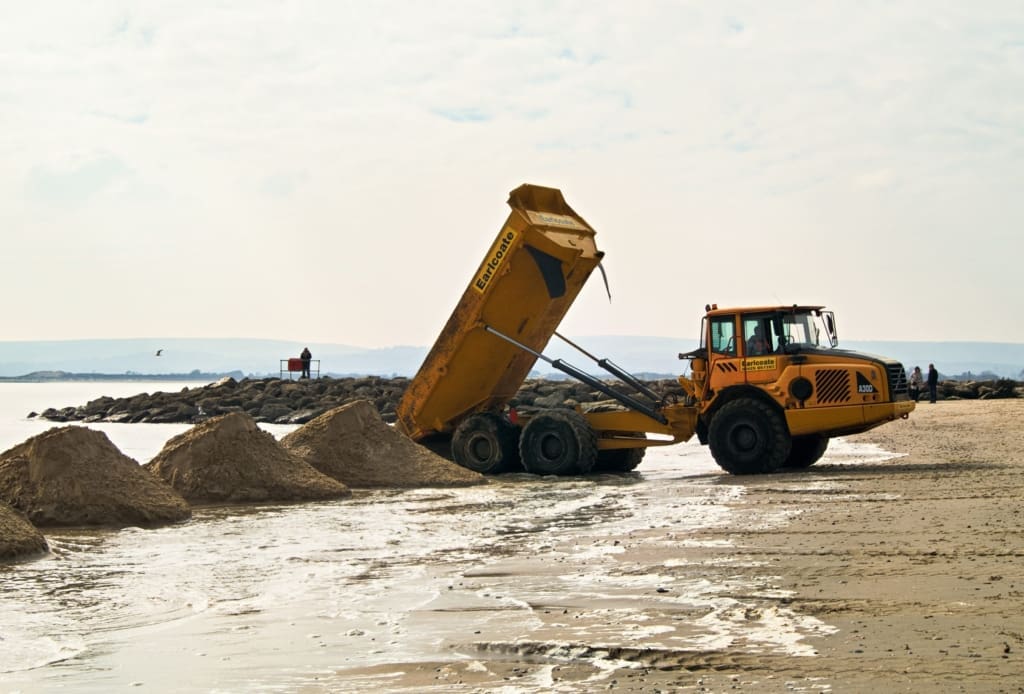
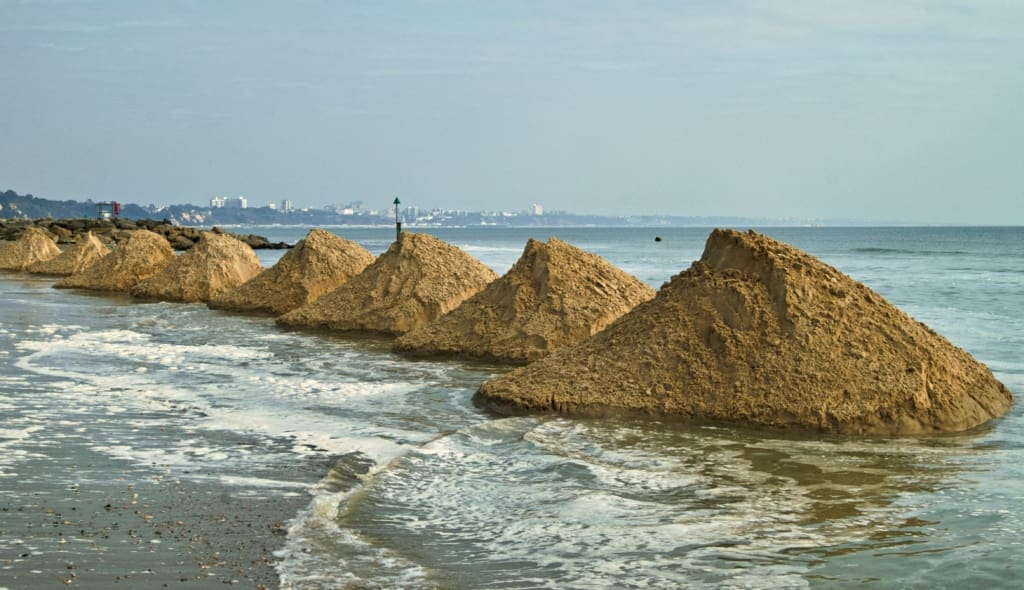
Always looking for greener and more efficient ways to protect the coast, the Environment Agency and DEFRA have even used Poole Bay to test cutting-edge replenishment techniques. In recent years, they trialled a “nearshore replenishment” approach. Instead of pumping sand directly onto the beach, ships dropped local dredged sediment into the shallow waters just offshore, allowing the natural tides and wave currents to gently push the material onto the beach over time—a method that could revolutionize coastal defences nationwide.
Watch the video!





Frequently Asked Questions
How is the sand actually put on the beach?
Specialist dredger ships anchor just offshore and connect to a temporary pipeline laid directly onto the beach. A mixture of sand and seawater is pumped at high pressure through the pipe onto the shore. Heavy bulldozers then work around the clock, between the tides, to distribute and flatten the sand into a protective profile.
How much does the Poole Bay beach protection cost?
The current Poole Bay Beach Management Scheme (running from 2015 to 2032) is a massive infrastructure project costing approximately £50 million. The vast majority of this is funded by the government through Flood Defence Grant in Aid (FDGiA), with local partnership funding from BCP Council.
What do the wooden groynes on the beach do?
The timber groynes act as giant speed bumps against a natural process called 'longshore drift', which naturally drags sand from west to east along the coast. By interrupting the wave energy, the groynes trap the sand in place, protecting the seawall and maximizing the lifespan of the costly beach nourishment sand.
Where does the new beach sand come from?
The sand used for Poole Bay replenishment is dredged from carefully managed, licensed offshore areas (often south of the Isle of Wight or from harbour approach channels). The material is strictly tested to ensure its grain size and colour closely match the native sand of Sandbanks and Bournemouth beaches.
Why does Sandbanks need beach nourishment?
Because seawalls and promenades were built to protect clifftop properties over the last century, the natural supply of sand from eroding cliffs was cut off. Without cyclic beach nourishment, natural wave action would erode the Sandbanks and Poole Bay coastline by up to 1 metre per year, destroying the beach and surrounding properties.