A QUARRY, SMUGGLERS, AND A “DANCING” SEA
Dancing Ledge gets its poetic name from the way the waves playfully wash over the flat shelf at high tide, making the water appear to “dance.” Historically, this area was heavily quarried for the famous Purbeck limestone, which was lowered directly from the cliffs onto waiting ships. Once quarrying ceased, the isolated sea caves and easy landing point made it a natural haven for smugglers. In fact, the nearby “Spyway” path gets its name from locals keeping a lookout for customs officers while moving contraband up the hill from the ledge!
IAN FLEMING & THE TIDAL SWIMMING POOL
The ledge’s most famous feature is the small, rectangular swimming pool blasted directly out of the solid rock. It was created in the early 20th century by Thomas Pellatt, the headmaster of the nearby (and now closed) Durnford Prep School. Pellatt had the pool dynamited so his pupils could enjoy a daily summer sea swim. Most notably, those pupils included a young Ian Fleming, the future author and creator of James Bond! Today, it provides a safe, sun-warmed tidal pool for wild swimming, completely surrounded by a dramatic coastline.
WILDLIFE AND COASTEERING
Today, Dancing Ledge is one of the most popular spots on the coast for thrill-seekers, offering world-class climbing routes and coasteering adventures. For nature lovers, the walk down from the cliffs offers rich grasslands where you can spot grazing animals, while the cliffs themselves occasionally play host to nesting puffins and guillemots in the early summer.
THE DEVIL’S ANVIL & ANCIENT MYTHS
How did a 400-tonne, iron-rich sandstone boulder end up sitting entirely alone on a Purbeck hill? The most famous legend claims it is the “Devil’s Anvil.” The story goes that the Devil himself threw the massive rock from The Needles on the Isle of Wight. Enraged and jealous of the impressive local architecture, he aimed for Corfe Castle, Salisbury Cathedral, or Bindon Abbey, but the immense weight caused it to fall short, turning to stone on the heath.
Other stories suggest a pagan history. Before the rock succumbed to the elements and toppled onto its side (falling to the south-east), it had a much flatter, anvil-like surface that was said to have been used as an altar by ancient Druids. Even its name is a mystery, with some believing it derives from the Anglo-Saxon words hagge (meaning ‘witch’) and stan (meaning ‘stone’), or from the Saxon halig-han meaning ‘Holy home’.
A QUARRYING RELIC OR NATURAL WONDER?
While geologists widely agree that it is a natural feature of the landscape—left behind as softer surrounding earth eroded away—there is evidence of human intervention. Its unique shape suggests it may have been subjected to minor quarrying, or perhaps it was intentionally left as a landscape relic by quarrymen, similar to the St Aldhelm’s Head monolith further down the coast. Today, it bears the carved initials of centuries of visitors, though modern explorers are urged to treat this spectacular piece of history with respect.
EXPLORING GODLINGSTON HEATH
The rock sits within the National Trust-managed Studland Nature Reserve, which forms part of the newly created Purbeck Heaths ‘super’ nature reserve—one of the most biodiverse areas in the UK. Depending on the season, the surrounding heathland is carpeted in swathes of purple heather and yellow gorse. Wildlife lovers should tread quietly, as this specific habitat is famously home to all six of the UK’s native reptile species, including the rare sand lizard.
The Peninsula’s Hidden Gem
While the main stretch of Sandbanks Beach draws visitors from all over the world, those in the know head slightly further west. Situated between the bustling main beach and the iconic Haven Point chain ferry, Cubs Beach (often referred to locally as Midway Beach) is a tranquil haven.
Whether you’re looking for a quiet spot to read a book, a safe place for a morning swim, or somewhere to let the dog run off the lead in the height of summer, this beautiful, sheltered stretch of coastline is the perfect choice.
A Paradise for Dog Walkers
If you are visiting Sandbanks with your furry friend between May 1st and September 30th, Cubs Beach will be your absolute go-to destination. It serves as the peninsula’s designated, all-year-round dog beach. With a gently shelving shoreline and incredibly calm, clear waters, it is exceptionally safe for dogs to swim and paddle. Don’t forget to make use of the handy dog-wash stations located just up the promenade after a long day of sandy paws!
Watching the World Float By
One of the greatest appeals of Cubs Beach is its prime location. Nestled right near the mouth of Poole Harbour—the second-largest natural harbour in the world—the beach provides front-row seats to a constant parade of maritime activity.
Spread out your picnic blanket and watch Sunseeker yachts, traditional sailboats, and paddleboarders glide through the water. You also get a fantastic vantage point of the Sandbanks Chain Ferry as it makes its continuous, historic crossing over to the Isle of Purbeck.
Seamlessly Connected
Despite feeling like a secluded, hidden retreat, Cubs Beach is exceptionally well-connected. A short, five-minute walk east along the seafront promenade takes you straight into the heart of the main Sandbanks resort, giving you instant access to the mini-golf course, sensory play area, and beachfront dining whenever you need it.
Welcome to Sandbanks Beach: Britain’s Ultimate Coastal Escape
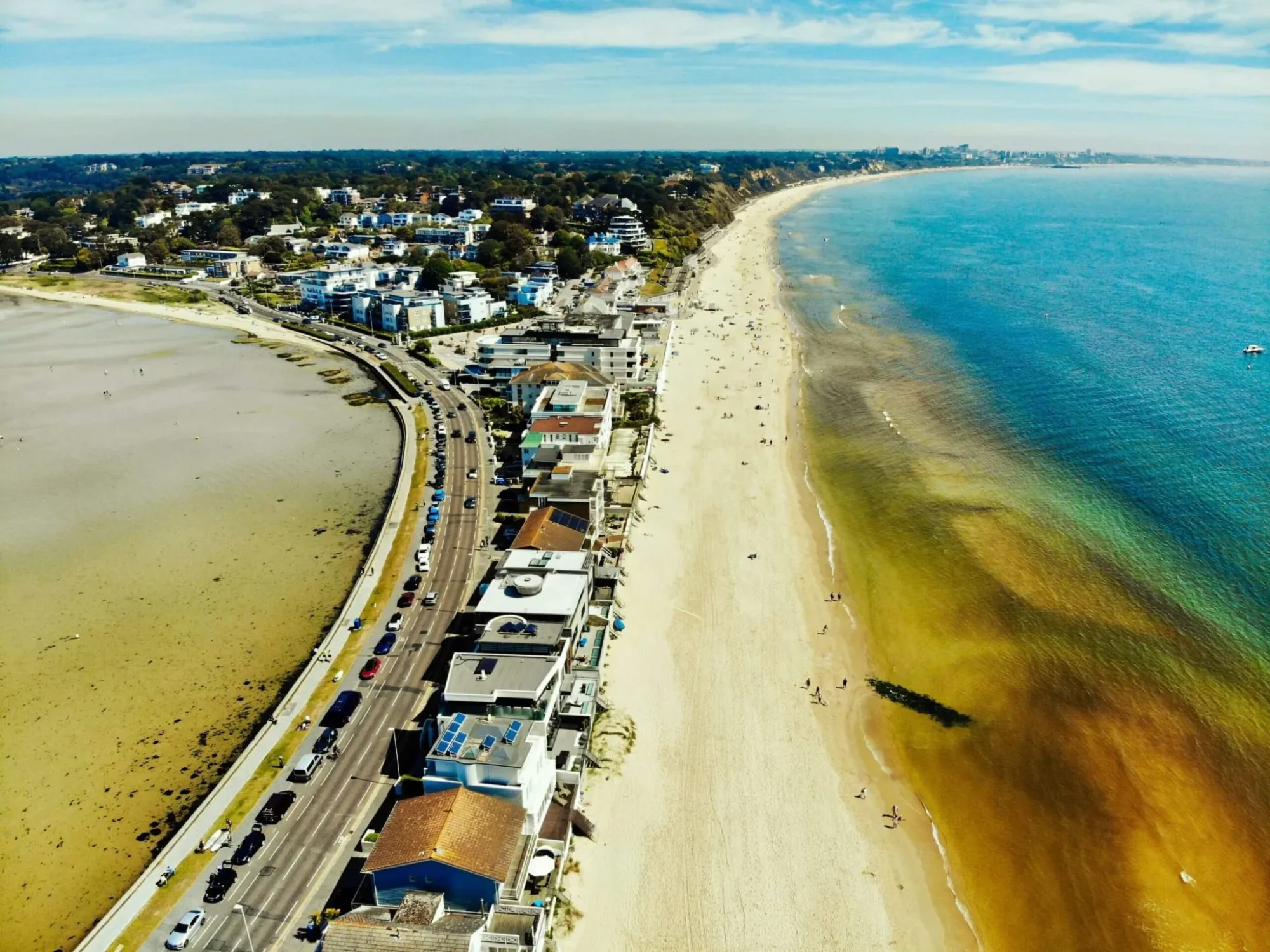
Sandbanks has one of the UK’s most iconic shorelines, and the name alone is synonymous with luxury, beauty, and relaxation. Widely considered one of the most visited tourist sites in Britain and a top destination in Dorset, Sandbanks Beach is the crown jewel of the South Coast.
From the moment you step out onto the soft, golden sand and look out over the beautiful blue ocean, you’ll feel like you’ve been transported to the Mediterranean. It really is one of the most beautiful and unique destinations in Britain, offering a premium seaside experience that simply cannot be matched.
Unrivaled Water Quality & Safety
Get up early and take a tranquil stroll along the famous shoreline, or dive into the crystal-clear water for an invigorating morning swim. The beach boasts a gently shelving shoreline, meaning the waist-height waters are calm, safe, and perfect for a relaxing dip.
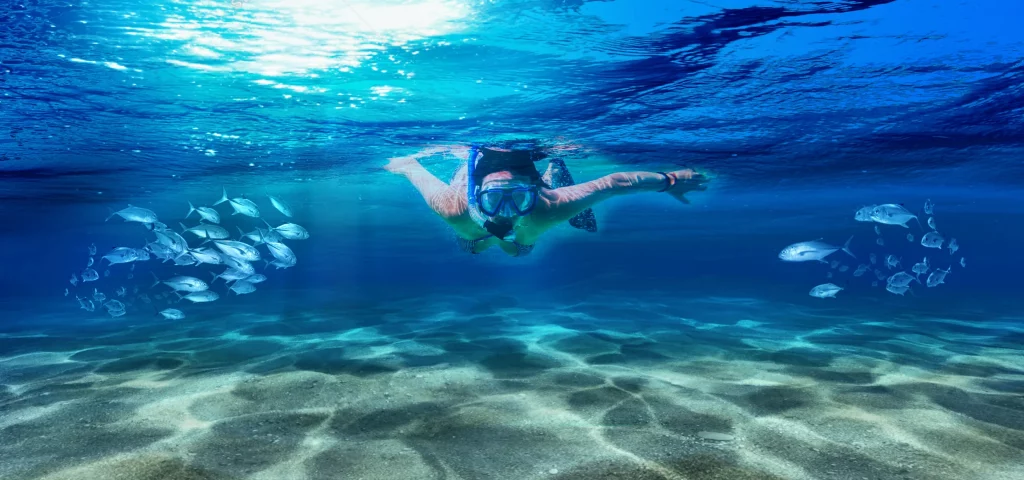
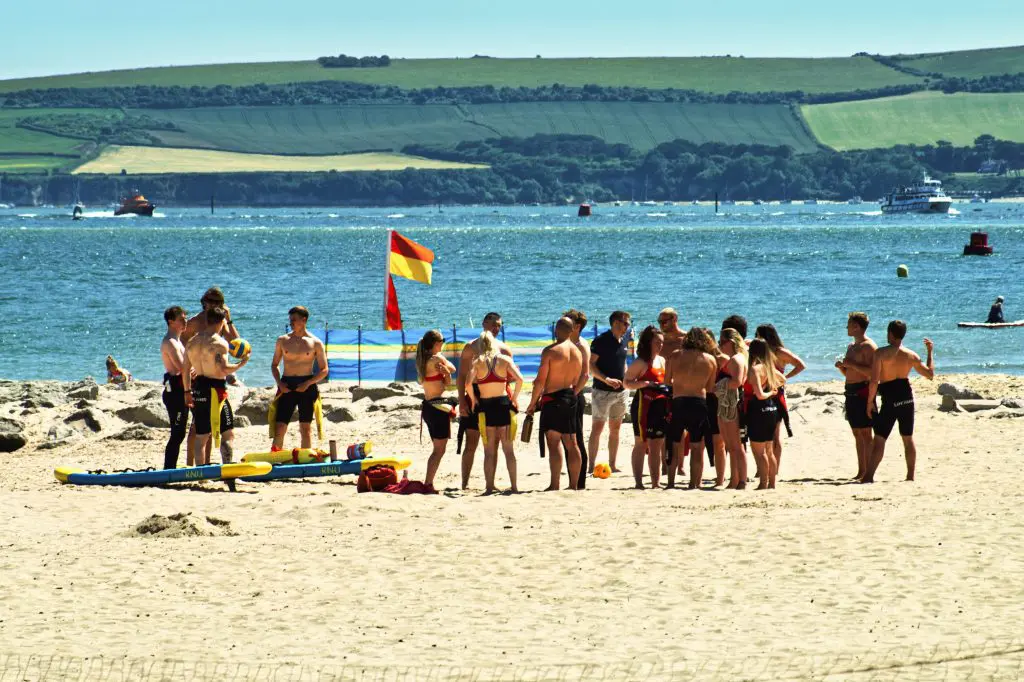
Sandbanks Beach is nationally known as one of the finest and cleanest in the country. In fact, it holds the prestigious Blue Flag award and has done so for over three consecutive decades—holding more consecutive awards than almost any other UK resort! With a team of highly trained RNLI lifeguards on duty throughout the summer season (May to September), Sandbanks is the ultimate spot for safe bathing and a worry-free family holiday.
Endless Family Fun & Beach Activities
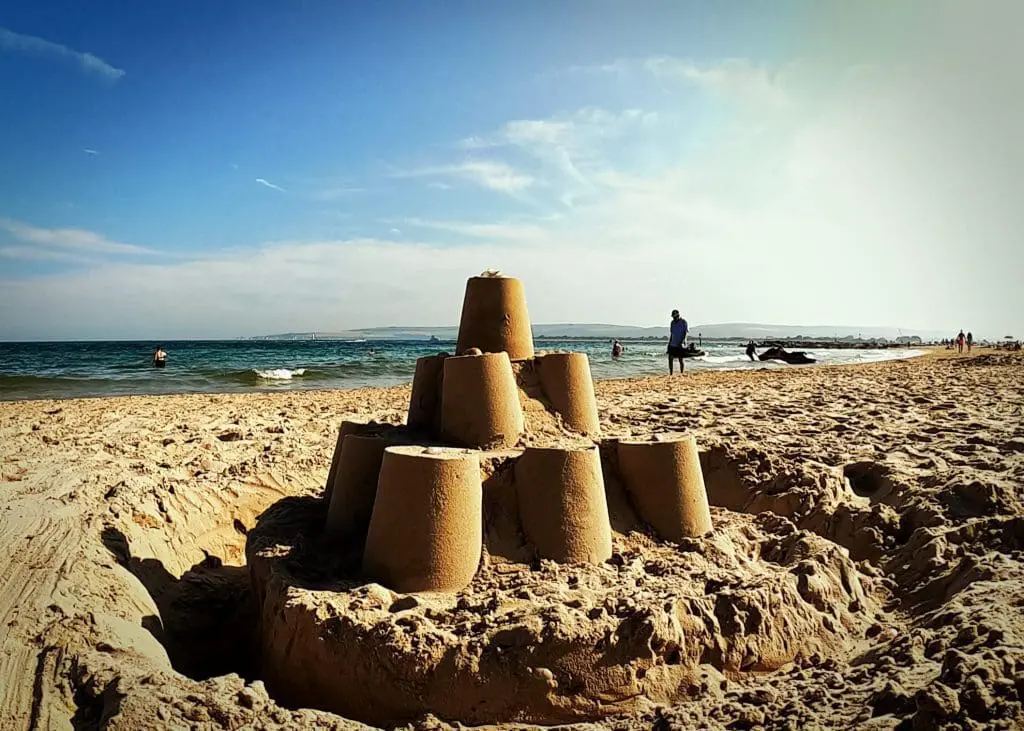
There’s something here to keep the whole family entertained all day. You can relax on the pebble-free sand while the children have fun building sandcastles with their buckets and spades. Lie back and listen to the melodic sounds of the waves as they continuously roll onto the shore and back out again.
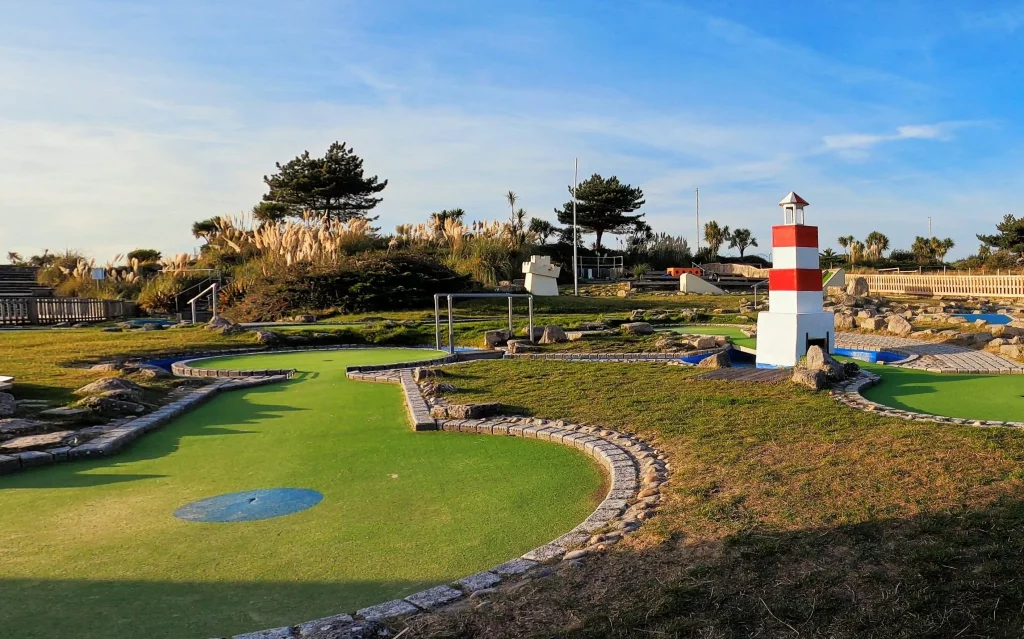
Looking for a little friendly competition? Challenge the kids to an 18-hole crazy golf tournament at the course situated just behind the beach, or let the little ones burn off some energy at the sensory children’s play area!
If you are feeling more energetic, Sandbanks Beach is an absolute mecca for sports enthusiasts. There is a massive area of the beach set aside specifically for beach volleyball, and the calm waters of Whitley Lake (on the harbour side) are famous for watersports. Rent some paddleboards or kayaks and glide across the smooth, clear waters of Poole Bay, or book a kitesurfing lesson with one of the local schools!
Stunning Views & The Jurassic Coast
Sandbanks Beach stretches from Canford Cliffs beach at Shore Road some one and a half miles westward, incorporating Cubs Beach where it joins the Sandbanks Ferry, linking the peninsula with Studland on the Isle of Purbeck.
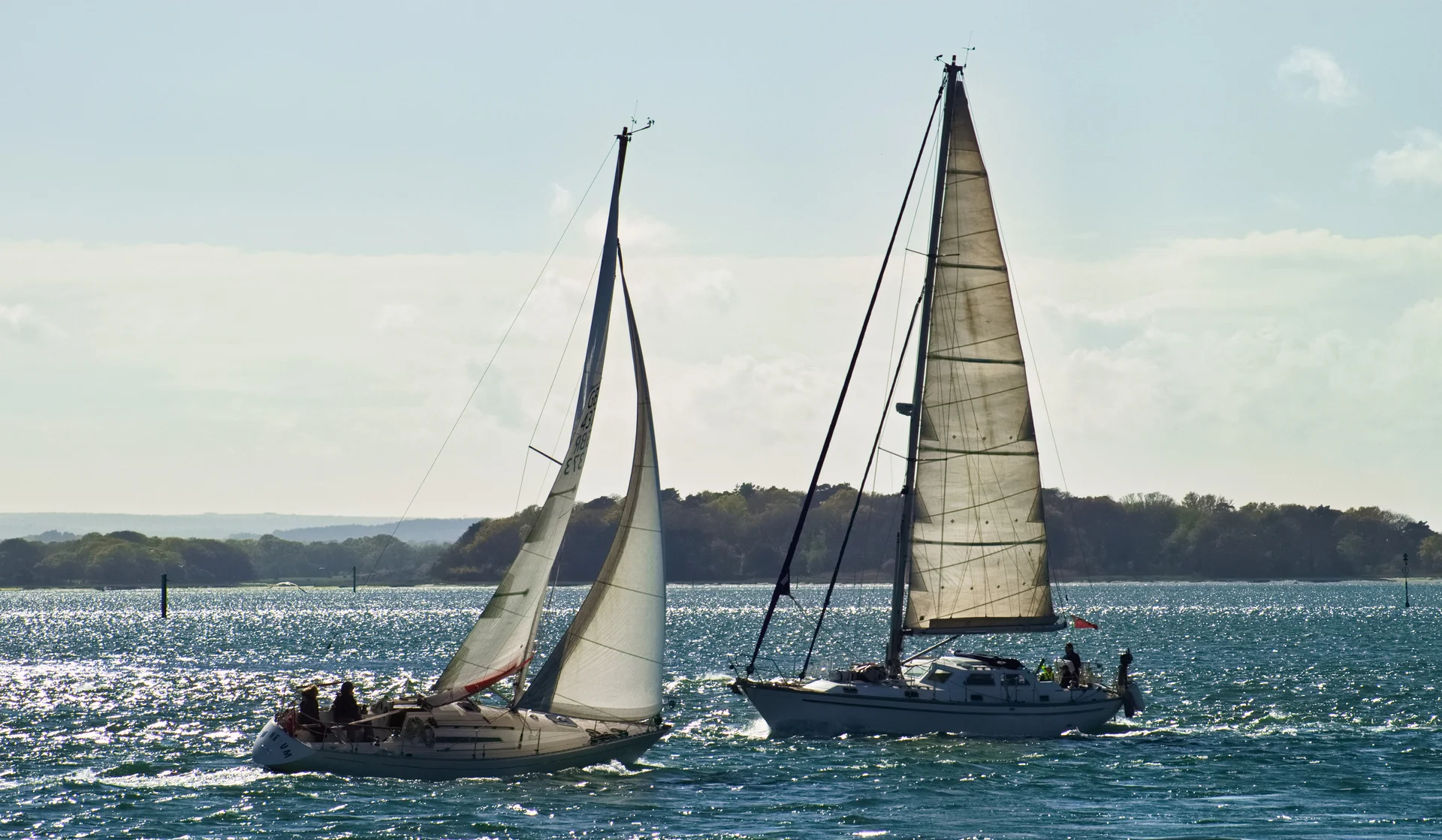
The visual backdrop here is nothing short of spectacular. On the south side of the peninsula, you can look out over the English Channel toward the World Heritage Jurassic Coastline and the Purbeck Hills. On a clear day, you can even spot the Isle of Wight! On the north side, you are treated to views of luxury yachts sailing through Poole Harbour toward Brownsea Island.
World-Class Facilities & Beachside Dining
Because of its premium reputation, the facilities adjacent to Sandbanks beach are second to none. The promenade is completely level, offering excellent accessibility (including Mobi-Mat beach access and beach wheelchair hires available from the beach office).
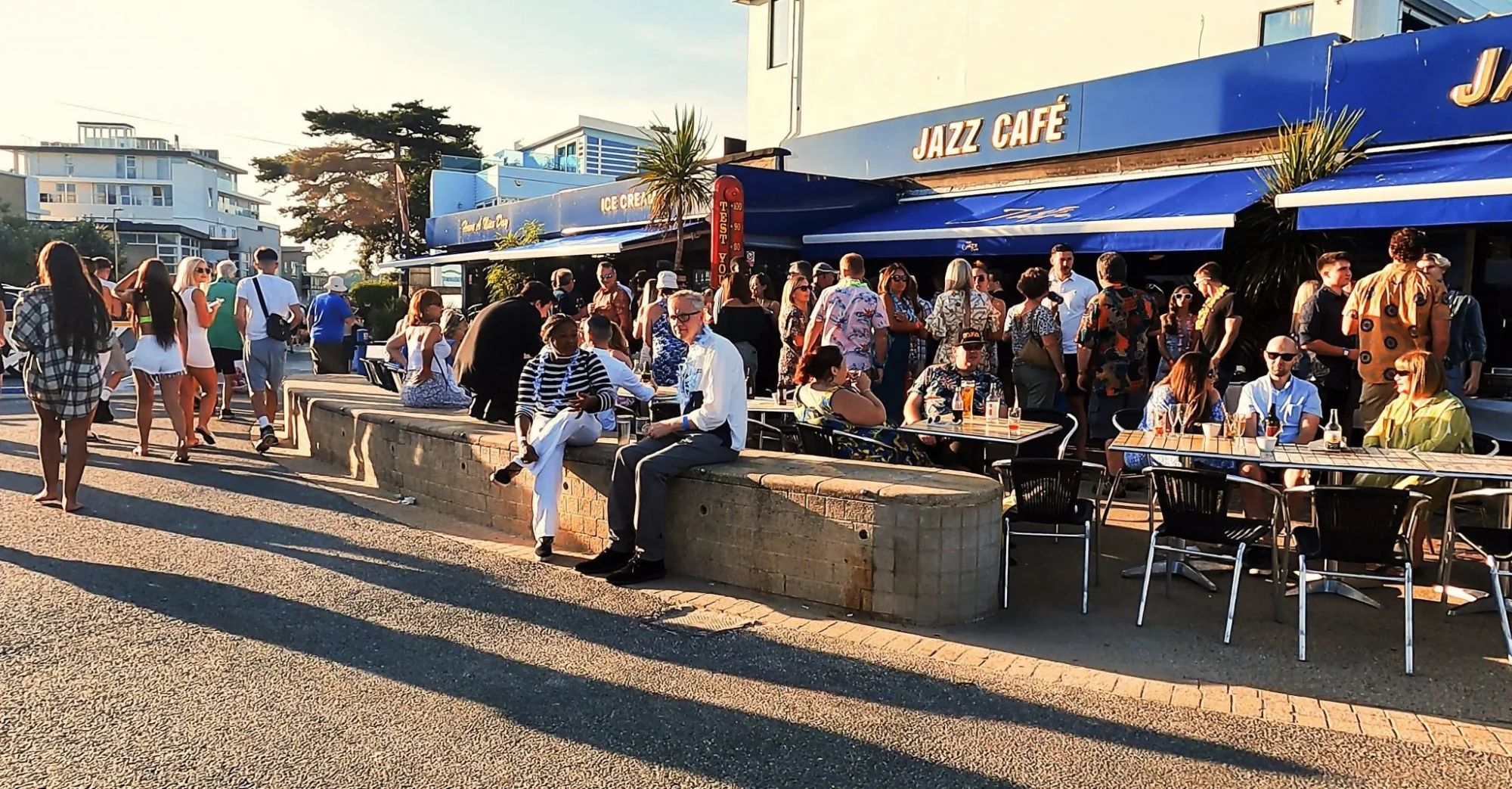
After a long day in the sun, you can enjoy breakfast, lunch, or dinner at one of the many cafés, kiosks, or premium beachside restaurants right on the promenade. If you prefer to cook your own dinner, Sandbanks allows evening beach BBQs (after 6:00 PM), making it the perfect place to watch the sunset with a burger in hand.
Location & Getting Here
With its proximity to a wide range of premium hotels and holiday apartments in Poole and Bournemouth, Sandbanks is incredibly easy to access.
If you are in your car, the main Sandbanks surface car park is located within 50 metres of the sand. However, because it is so popular, it fills up quickly! Thankfully, there are regular open-top bus services (like the Purbeck Breezer) running from Poole and Bournemouth directly to the beach, so you can leave your car where you’re staying and have a hassle-free day enjoying the coast!
Walk the Historic Cockle Trail
To truly understand Poole, you have to explore the Old Town. Take the children on the “Cockle Trail”—simply follow the numbered brass cockle signs set into the paving slabs. This self-guided walk takes you past the newly renovated Poole Museum and Scaplen’s Court, a Grade I listed medieval building dating back to the 1300s. At the eastern end of the Quay (Fisherman’s Dock), you will also find the Old Lifeboat Museum, offering a close-up view of one of Poole’s historic rescue vessels.
Art, Scouts, and Superyachts
As you walk along the waterfront, you will be greeted by the life-size bronze statue of Lord Baden-Powell. He is positioned perfectly, looking out across the water to Brownsea Island, where he held the very first experimental scout camp in August 1907.
Further down, you cannot miss the towering Sea Music Sculpture designed by Sir Anthony Caro. You can actually climb to the top of this impressive artwork for spectacular, elevated views over the quayside. Looking across the water, you will see the massive manufacturing yards of Sunseeker International, where billionaires’ luxury motor yachts are built before being tested right in front of you in the harbour.
The Art of Crabbing
If you are visiting with children, ‘crabbing’ on the Quay is an absolute must-do. It is a beloved local tradition. You don’t need to bring anything with you—a bucket, a crab line, and some bait can be easily purchased from the small kiosks on the quayside. Find a spot along the sea wall, drop your line, and spend an enjoyable few hours seeing how many crabs you can catch before safely returning them to the sea!
Authentic Local Food & Drink
Forget the national chains; Poole Quay is packed with fantastic independent eateries.
-
The Poole Arms: You can’t miss it—it’s the building covered in distinctive green Carter’s tiles. As the oldest pub on the Quay, it specializes in fantastic, fresh local seafood.
-
Harlees Fish & Chips: Grab an award-winning takeaway and sit on the harbour wall to watch the boats come in.
-
Guildhall Tavern: Located just two minutes off the Quay in the Old Town, this highly-rated French restaurant is the ultimate spot for a premium, locally sourced seafood dinner.
-
Deli on the Quay: The perfect spot for a morning coffee and a homemade pastry while watching the harbour wake up.
The Gateway to the Islands
The Quay is the primary departure point for exploring the rest of the harbour. From here, you can hop on the Green Island Ferries to Brownsea Island, or take a “Harbour Cruise” that takes you past the five main islands and the massive sea-front mansions of Sandbanks. For a longer adventure, look for the boats heading to Swanage, which offer a spectacular perspective of Old Harry Rocks from the sea.
Seafood and Sunsets
Being a working fishing port, the seafood on the Quay is as fresh as it gets. As the sun begins to set, the bars along the waterfront come alive. Grab an outdoor table, order a local Dorset ale, and watch the sky turn pink over the masts of the boats—it’s the perfect end to a Dorset day.
A Venetian Palace in Dorset
The first thing you notice about Kingston Lacy is that it doesn’t look like a typical English manor. After the family’s original home, Corfe Castle, was destroyed in the Civil War, they built this new seat to be the height of fashion. Inside, the house is a masterclass in opulence. The Spanish Room is a highlight, featuring walls covered in gilded leather and a ceiling imported directly from a Venetian palace. You’ll also find works by Rubens, Van Dyck, and Titian hanging in the galleries, making it a must-visit for art lovers.
The Egyptian Obsession
Kingston Lacy holds one of the most important collections of Egyptian antiquities in the UK. This is thanks to William John Bankes, an adventurous explorer and friend of Lord Byron. On the South Lawn stands a massive, 2,000-year-old stone obelisk brought back from the island of Philae. Inside the house, you can explore an entire room dedicated to Egyptian artifacts, including bronze cats and ancient papyrus scrolls that helped early scholars decipher hieroglyphics.
The Japanese Garden and Kitchen Garden
The gardens at Kingston Lacy are as diverse as the house.
-
The Japanese Garden: Created in the early 1900s, this is a serene space filled with authentic stone lanterns, a tea house, and a winding stream. It is particularly beautiful in May when the azaleas are in bloom.
-
The Kitchen Garden: A massive, productive space that still supplies the on-site café. Walk through the Victorian greenhouses and see the heritage varieties of apples, pears, and vegetables being grown just as they were a century ago.
A Working Country Estate
Beyond the formal fences, the Kingston Lacy estate covers thousands of acres of Dorset farmland. It is home to a famous herd of Red Ruby Devon Cattle, which you will often see grazing in the parkland. For those who love to hike, the estate includes Badbury Rings, an Iron Age hill fort with spectacular views across the county. Whether you are there for the high-end art or a muddy woodland walk with the kids, Kingston Lacy offers a complete day out.
A Geological Masterpiece
Lulworth Cove is world-famous for its unique geology. It was formed approximately 10,000 years ago when a river, swollen by melting ice, breached the hard outer band of Portland limestone. Once the water broke through, it rapidly eroded the softer clays and chalk behind it, hollowing out the perfect horseshoe shape you see today. Because the beach is made of white shingle rather than fine sand, the water remains spectacularly clear and brilliantly blue.
Discover the Lulworth Crumple
Just a five-minute walk west of the cove is another mind-bending geological site known as Stair Hole. Here, you can see the famous “Lulworth Crumple”—layers of rock that were folded and crushed together by the same tectonic forces that created the Alps. It is a spectacular sight and provides a sneak peek into exactly how Lulworth Cove itself looked thousands of years ago before the sea fully broke through.
A Paddler’s Paradise
Because the narrow entrance to the cove acts as a natural breakwater, the bay is effectively a massive, saltwater swimming pool. It is arguably the best spot in Dorset for stand-up paddleboarding (SUP) and kayaking. You can launch right from the slipway and paddle safely around the curving white cliffs. During the summer, you can easily hire equipment right on the beach or book a guided kayak tour to explore the hidden caves and rock arches just outside the cove.
The Ultimate Two-For-One Hike
If you are feeling energetic, Lulworth Cove is the starting point for one of the most famous walks in the UK. A wide, well-maintained (but very steep!) path leads from the car park directly over the hill to Durdle Door. The walk takes about 30 minutes each way and rewards you with sweeping, elevated views of both landmarks. Hiking over the hill, snapping photos of the arch, and returning to Lulworth for a pint of local ale and fresh seafood at The Boat Shed Café is the definitive Dorset day out.
A UNESCO World Heritage Marvel
Durdle Door is the undisputed star of the Jurassic Coast, England’s first natural UNESCO World Heritage Site. The name “Durdle” is derived from the Old English word ‘thirl’, meaning to bore or drill. The arch was formed when the power of the ocean finally punched a hole through the tough Portland limestone. Looking at the rock strata—which have been folded completely vertically by ancient tectonic shifts—is like looking back through 140 million years of Earth’s history.
Two Beaches for the Price of One
When you reach the bottom of the steps, you actually have a choice between two spectacular beaches. Turn right, and you are on the main Durdle Door beach, staring directly at the iconic arch. Turn left, and you step onto Man O’War Beach. This stunning, crescent-shaped bay is protected from the open ocean by a band of partially submerged rocks, creating a sheltered lagoon of turquoise water that looks like it belongs in the Mediterranean.
Wild Swimming with Caution
On a calm summer’s day, the crystal-clear waters around Durdle Door are incredibly inviting for a wild swim. The beach is made of shingle and pebbles rather than sand, which keeps the water beautifully clear. However, the beach shelves very steeply into deep water just a few feet from the shore. Because there are no lifeguards on duty and the tidal currents around the arch can be surprisingly strong, swimming is recommended only for strong, confident swimmers on calm days. (Note: Jumping from the top of the arch—known as tombstoning—is strictly prohibited and highly dangerous due to submerged rocks).
Part of the Lulworth Estate
It surprises many visitors to learn that Durdle Door is not owned by the National Trust or the government, but is actually part of the privately owned Lulworth Estate. The Weld family has owned and managed this 12,000-acre estate since 1641. They maintain the paths, steps, and car parks, allowing millions of visitors to safely experience this magnificent piece of the British coastline every single year.
The Gateway to the Purbecks
The moment you step off the Sandbanks Chain Ferry, Shell Bay welcomes you to the Isle of Purbeck. Unlike the highly developed promenades of Bournemouth and Poole, Shell Bay is completely natural. The beach is composed of incredibly fine, white sand that shelves very gently into the sea, making it a safe and relaxing environment for paddling and swimming.
Boat Watching and Spectacular Views
Because Shell Bay forms the southern lip of the Poole Harbour entrance, it offers a front-row seat to one of the busiest and most glamorous waterways in Europe. Beachgoers can relax on the sand while massive Brittany Ferries, sleek luxury yachts built across the water at Sunseeker, and fleets of dinghies navigate the narrow channel. Look directly across the water, and you will see the multi-million-pound mansions of the Sandbanks peninsula from a completely new perspective.
The Shifting Dunes
The beach is backed by a vast system of undulating sand dunes, which are protected by the National Trust. These dunes are a dynamic, ever-changing environment bound together by marram grass. They provide fantastic, sheltered sun traps on windy days, but visitors are asked to stick to the designated paths to protect the fragile nesting sites of local seabirds and the rare sand lizards that call the dunes home.
The Shell Bay Restaurant
While the beach itself is wild, luxury isn’t far away. Located right at the edge of the beach by the ferry terminal is the highly acclaimed Shell Bay Seafood Restaurant. Known as one of the best dining spots in Dorset, you can sit on the terrace, enjoy locally caught Purbeck seafood, and look out over the very waters your dinner was caught in.
The Gateway to the Jurassic Coast
Old Harry Rocks is geologically fascinating. These towering stacks of chalk are actually part of a long seam of rock that once stretched continuously across the sea to the Isle of Wight. Over thousands of years, the relentless pounding of the waves eroded the softer rock, leaving behind these dramatic standalone pillars. On a clear day, look east across the water—you can still see Old Harry’s matching chalk counterparts, The Needles, standing on the Isle of Wight.
The Legend of “Old Harry”
How did these rocks get their name? Local legend offers two very different stories. The most popular tale claims the rocks were named after Harry Paye, an infamous pirate and smuggler from nearby Poole, who used the hidden coves around the stacks to stash his contraband. The second, slightly more sinister legend suggests that “Old Harry” is a traditional nickname for the Devil, who supposedly took a nap on the rocks.
Historically, there was also another stack known as “Old Harry’s Wife,” but she unfortunately collapsed into the sea during a fierce storm in 1896, leaving Old Harry standing alone.
A World-Class Coastal Walk
The journey to the rocks is just as enjoyable as the destination itself. Setting off from Studland village, the trail leads you briefly through a shaded, atmospheric woodland tunnel before opening out onto the sweeping, grassy clifftops. As you walk, you are treated to panoramic views on both sides. To your right, the vast expanse of the English Channel; to your left, spectacular views looking right back across Studland Bay to the Sandbanks peninsula and Bournemouth.
Wildlife on the Cliffs
Because the cliffs are undisturbed by development, they are a thriving habitat for local wildlife. The chalk face is home to nesting seabirds, including cormorants and guillemots. If you are very lucky and keep a sharp eye out, you might even spot a peregrine falcon hunting along the coastline or a pod of bottlenose dolphins playing in the surf far below.