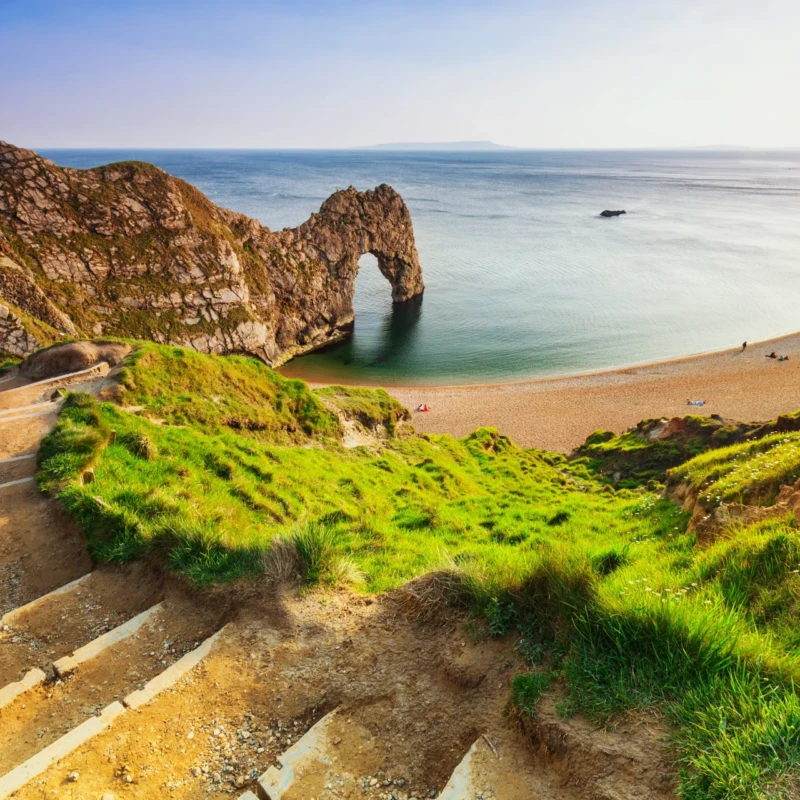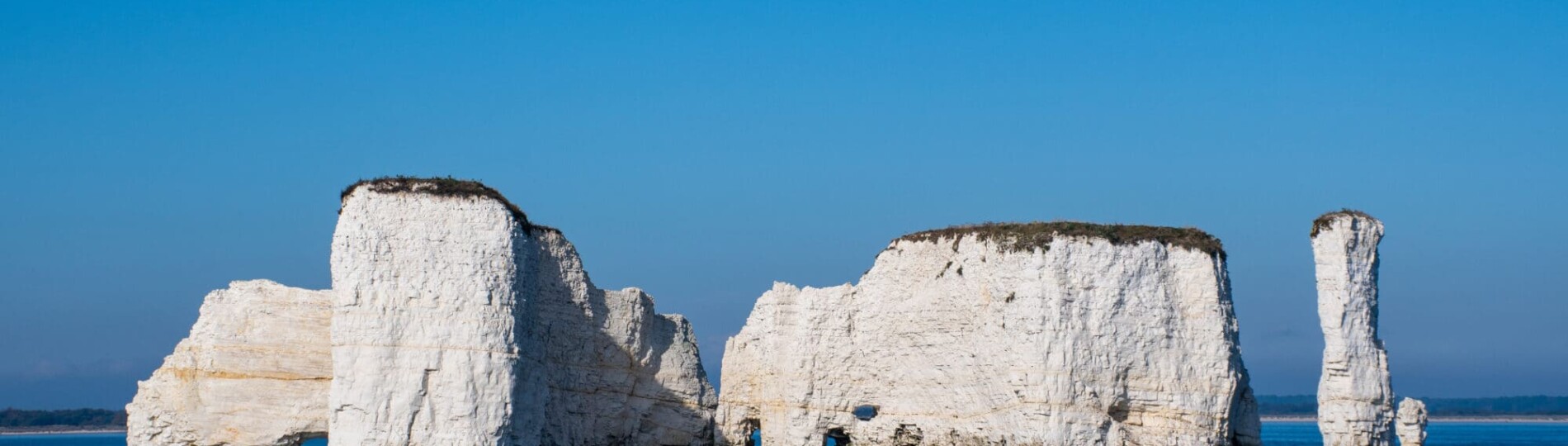
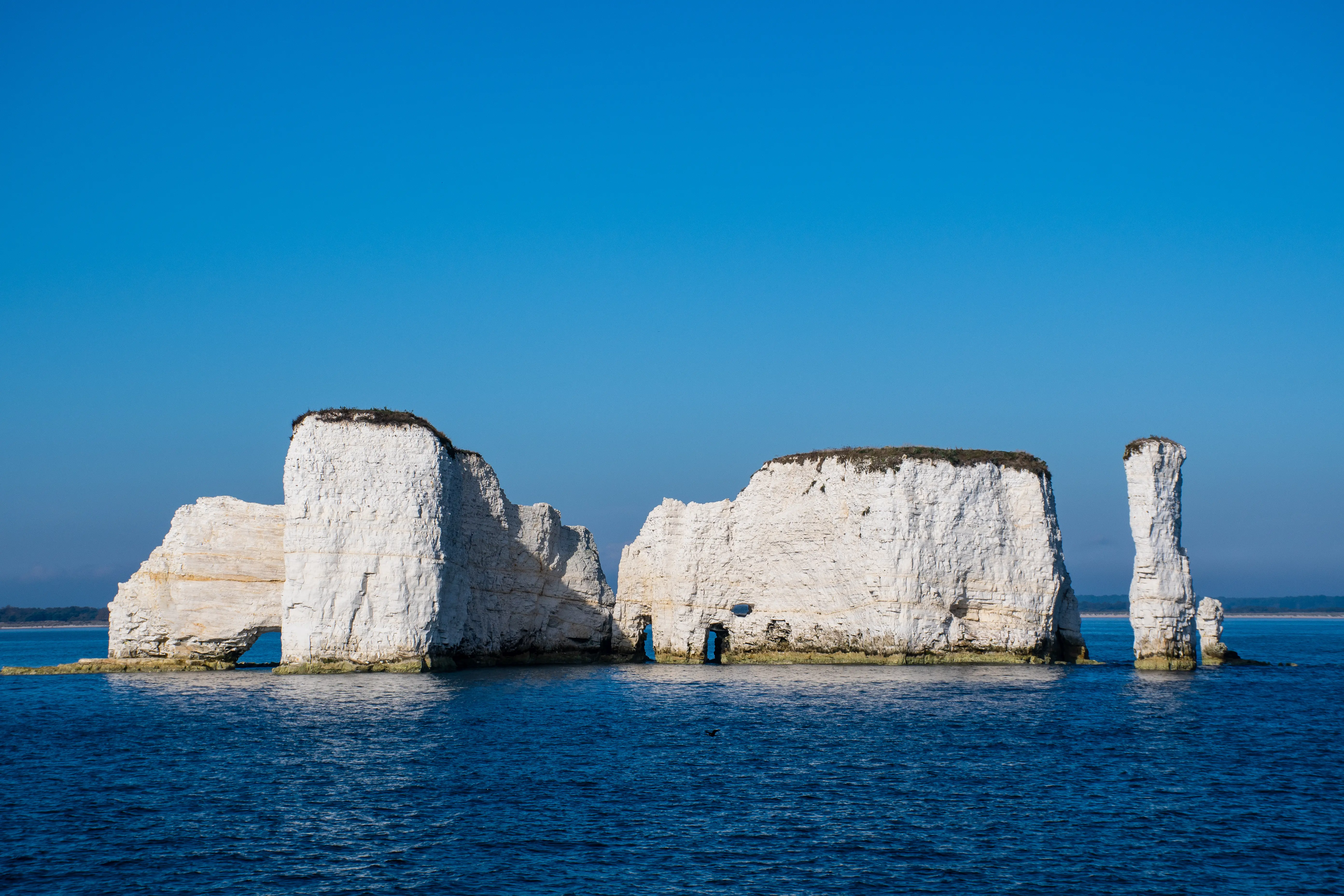
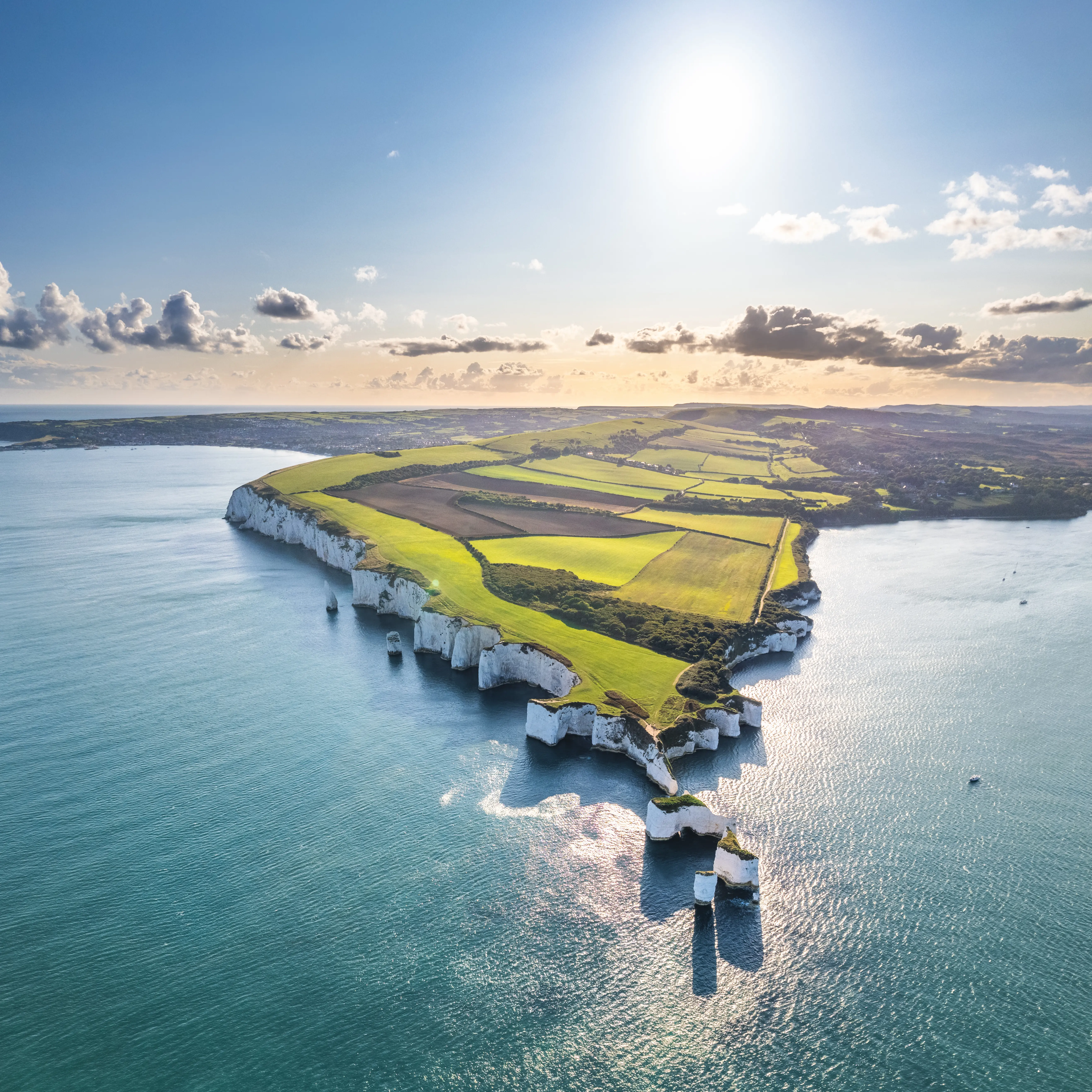
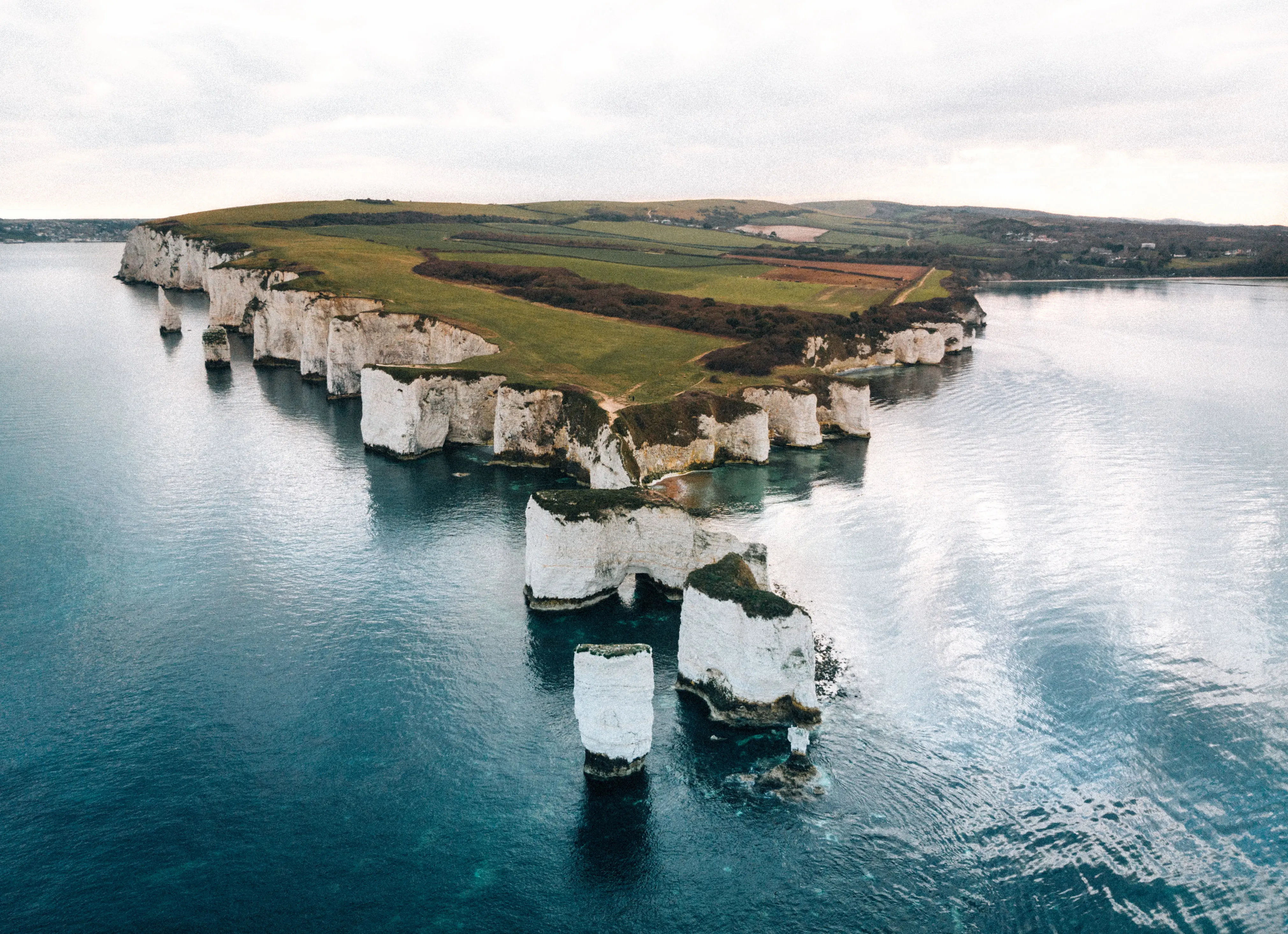
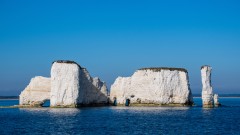
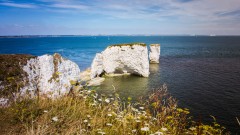
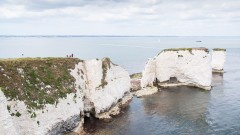
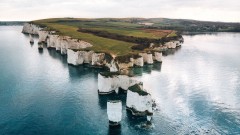
Standing proudly at the southern end of Studland Bay, Old Harry Rocks marks the official starting point of the UNESCO World Heritage Jurassic Coast.
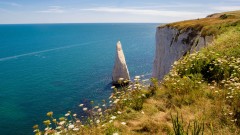
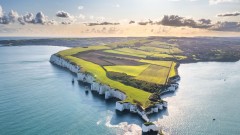
These towering, brilliant white chalk formations have been carved by the sea over thousands of years. Reached via a beautiful, breezy hike from the village of Studland, it is a bucket-list destination that offers an unforgettable perspective of the Dorset coastline and the vast expanse of the English Channel.
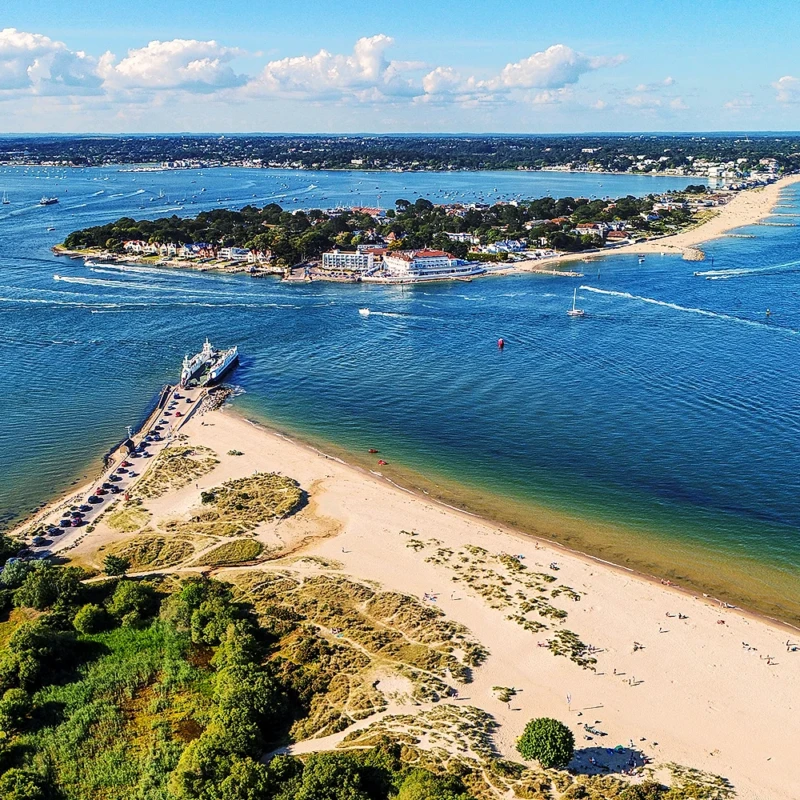
The journey begins by crossing the water on the Sandbanks Chain Ferry, followed by a highly rewarding walk.
-
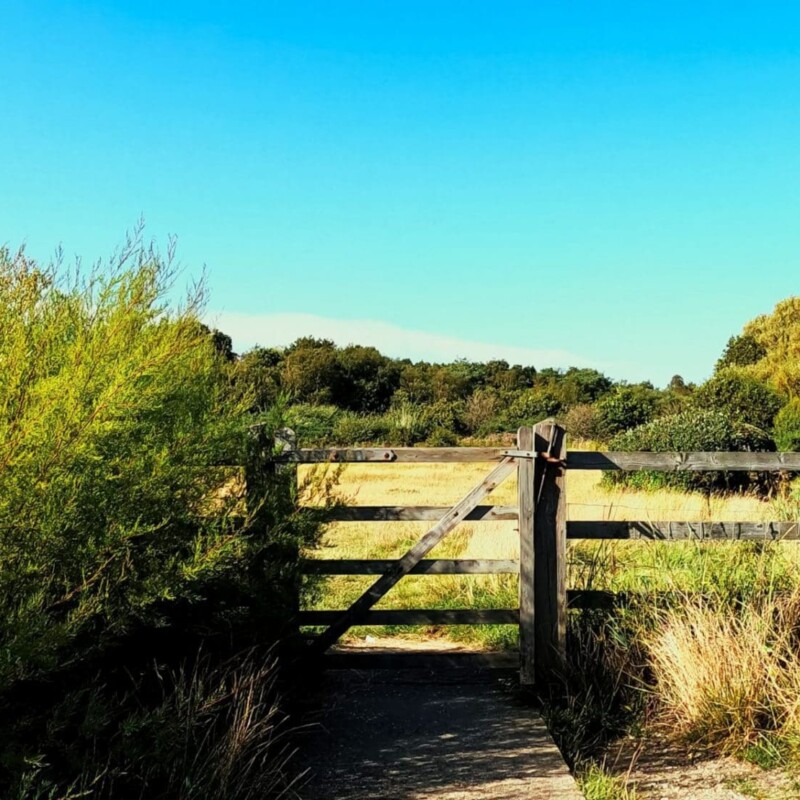
By Car & Foot: Drive off the ferry and follow the road to the National Trust South Beach car park in Studland village. From there, it is a well-signposted 1.5-mile (about 30 to 40 minutes) walk along a rustic gravel path to the cliff edge.
-
By Bus: The Purbeck Breezer bus from Sandbanks drops you right at the start of the trail in Studland.
-
By Sea: For a completely different angle, you can book a kayaking tour from Studland Beach or take a boat cruise from Poole Quay that sails right up to the base of the rocks.
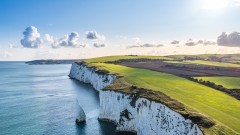
Old Harry Rocks is a spectacular sight in any weather, but a clear, sunny day truly brings out the dazzling white of the chalk.
-
Summer High Season: The trail can get busy during July and August. We recommend setting off early in the morning to secure parking and enjoy a quieter walk.
-
Spring and Autumn: Arguably the best times to hike the trail, offering cooler walking temperatures, blooming coastal wildflowers, and dramatic, moody skies.
-
Caution: Avoid the cliff edges on exceptionally windy or stormy days.
The path to the rocks is a rural dirt and gravel track, making it moderately accessible but requiring some caution.
-
The Terrain: The 1.5-mile path is relatively flat with a few gentle inclines. It is generally suitable for rugged pushchairs and robust, off-road mobility scooters, but standard wheelchairs may struggle with the uneven gravel.
-
Safety First: There are no fences or barriers at the cliff edges. Please stay on the designated paths, keep children close, and keep dogs on a tight lead at all times.
As a natural coastal landscape, the path and viewpoint are open and free to access 24 hours a day, 365 days a year.
-
Parking Hours: Be sure to check the closing times of the National Trust car park in Studland, as the gates may be locked in the evening.
-
Pub Stops: The famous Bankes Arms pub, located right at the start of the trail, is a traditional spot to grab a well-earned drink or meal after your walk.
Perfect for
Map Directions
The Gateway to the Jurassic Coast
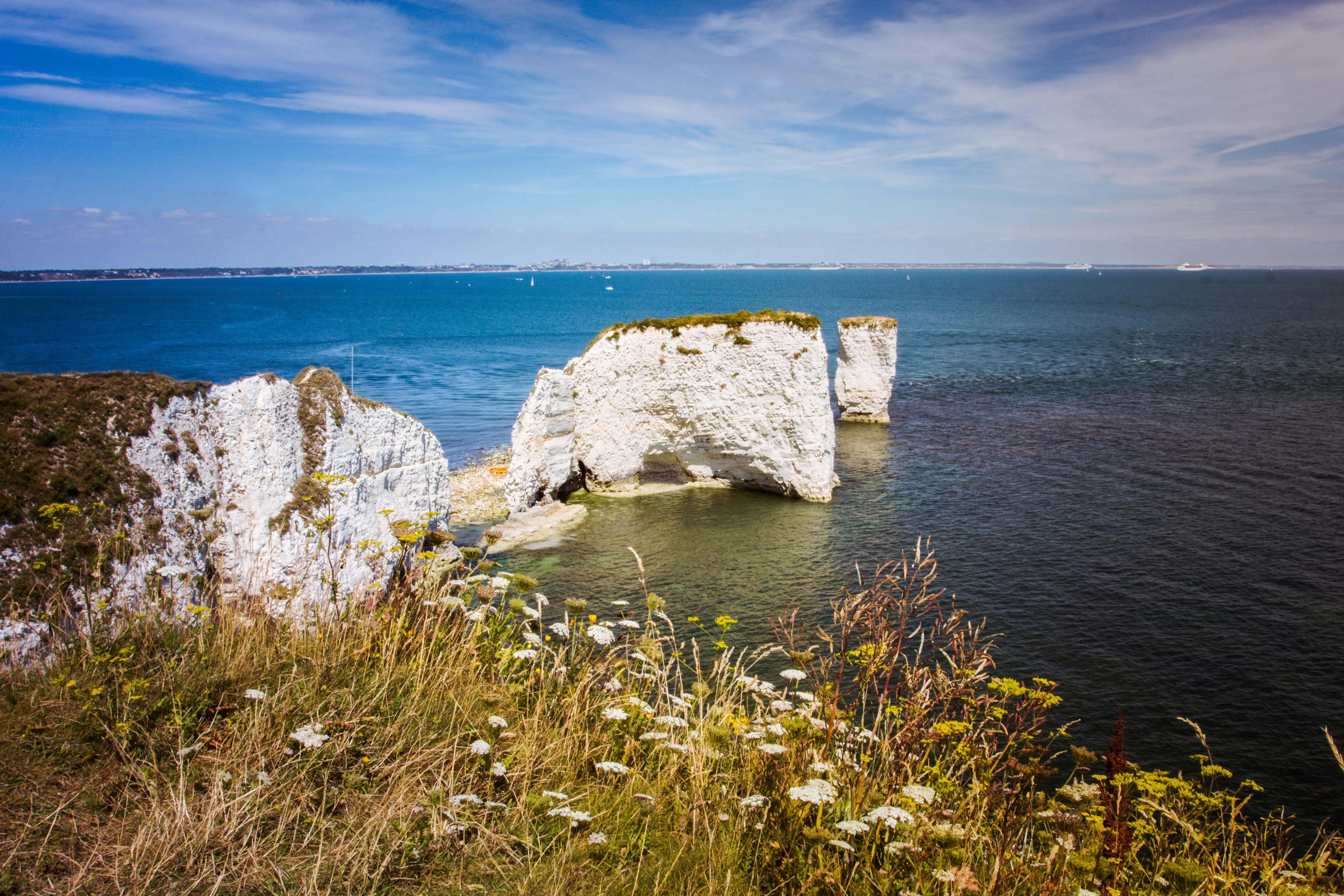
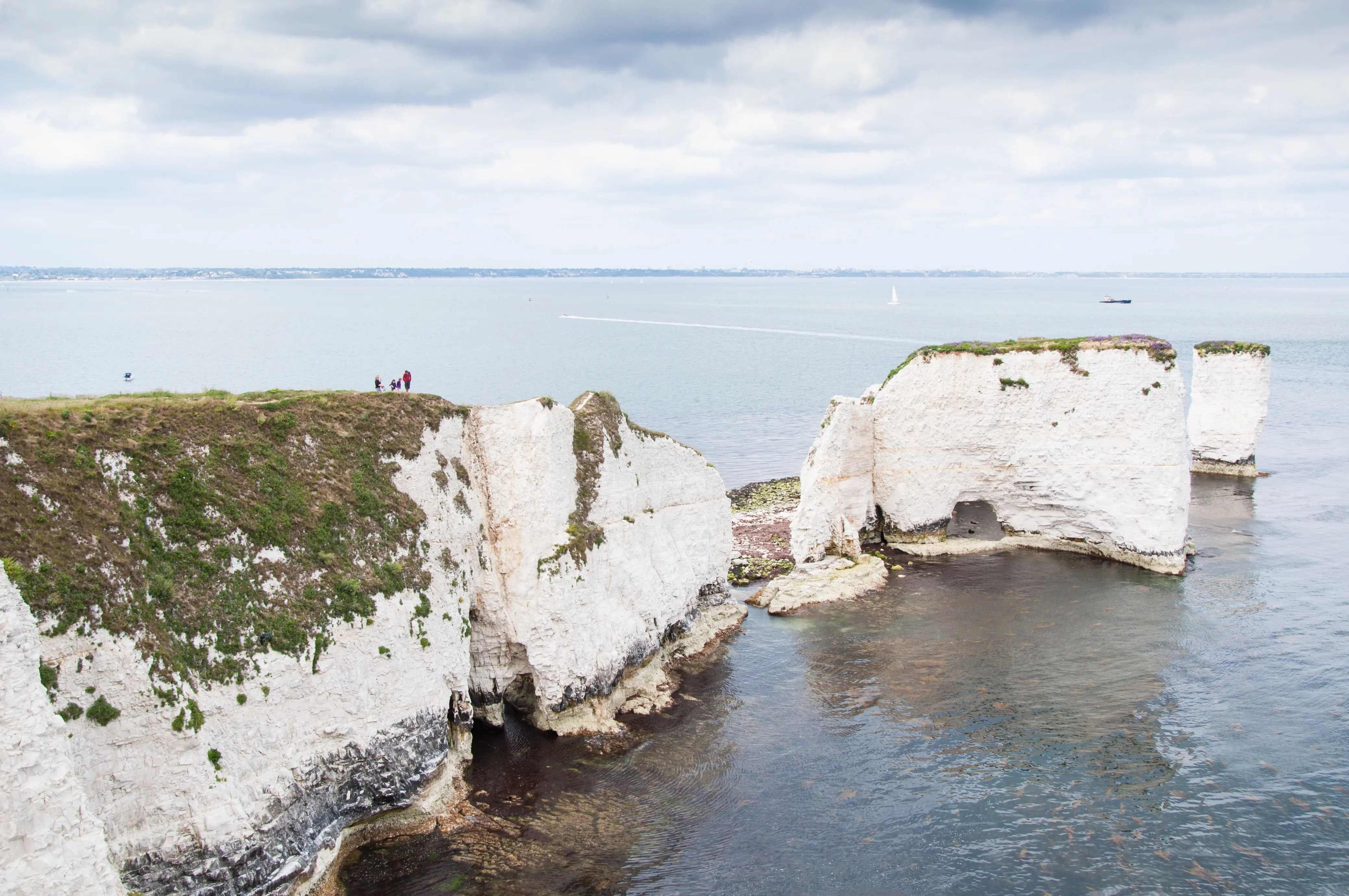
Old Harry Rocks is geologically fascinating. These towering stacks of chalk are actually part of a long seam of rock that once stretched continuously across the sea to the Isle of Wight. Over thousands of years, the relentless pounding of the waves eroded the softer rock, leaving behind these dramatic standalone pillars. On a clear day, look east across the water—you can still see Old Harry’s matching chalk counterparts, The Needles, standing on the Isle of Wight.
The Legend of “Old Harry”
How did these rocks get their name? Local legend offers two very different stories. The most popular tale claims the rocks were named after Harry Paye, an infamous pirate and smuggler from nearby Poole, who used the hidden coves around the stacks to stash his contraband. The second, slightly more sinister legend suggests that “Old Harry” is a traditional nickname for the Devil, who supposedly took a nap on the rocks.
Historically, there was also another stack known as “Old Harry’s Wife,” but she unfortunately collapsed into the sea during a fierce storm in 1896, leaving Old Harry standing alone.
A World-Class Coastal Walk
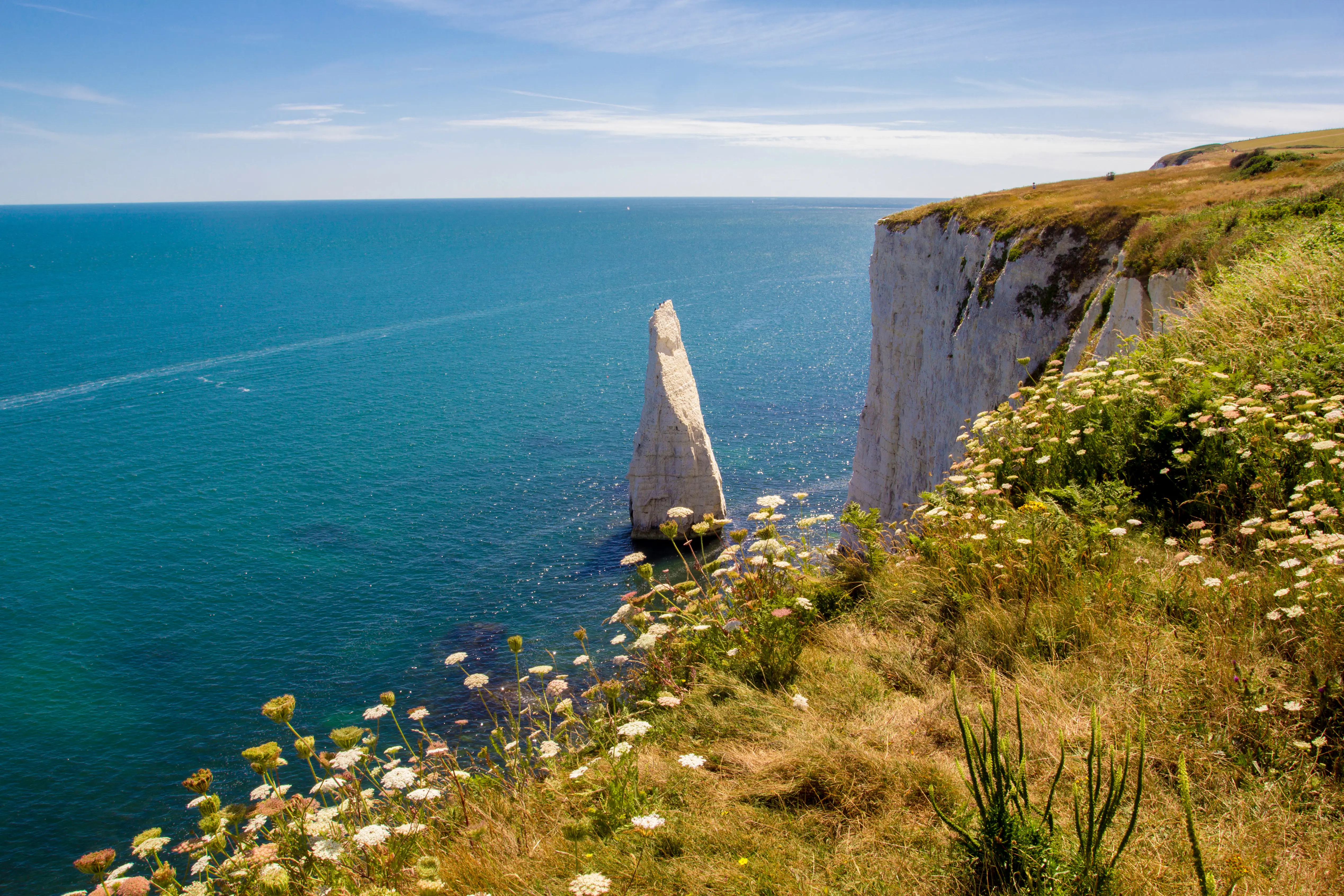
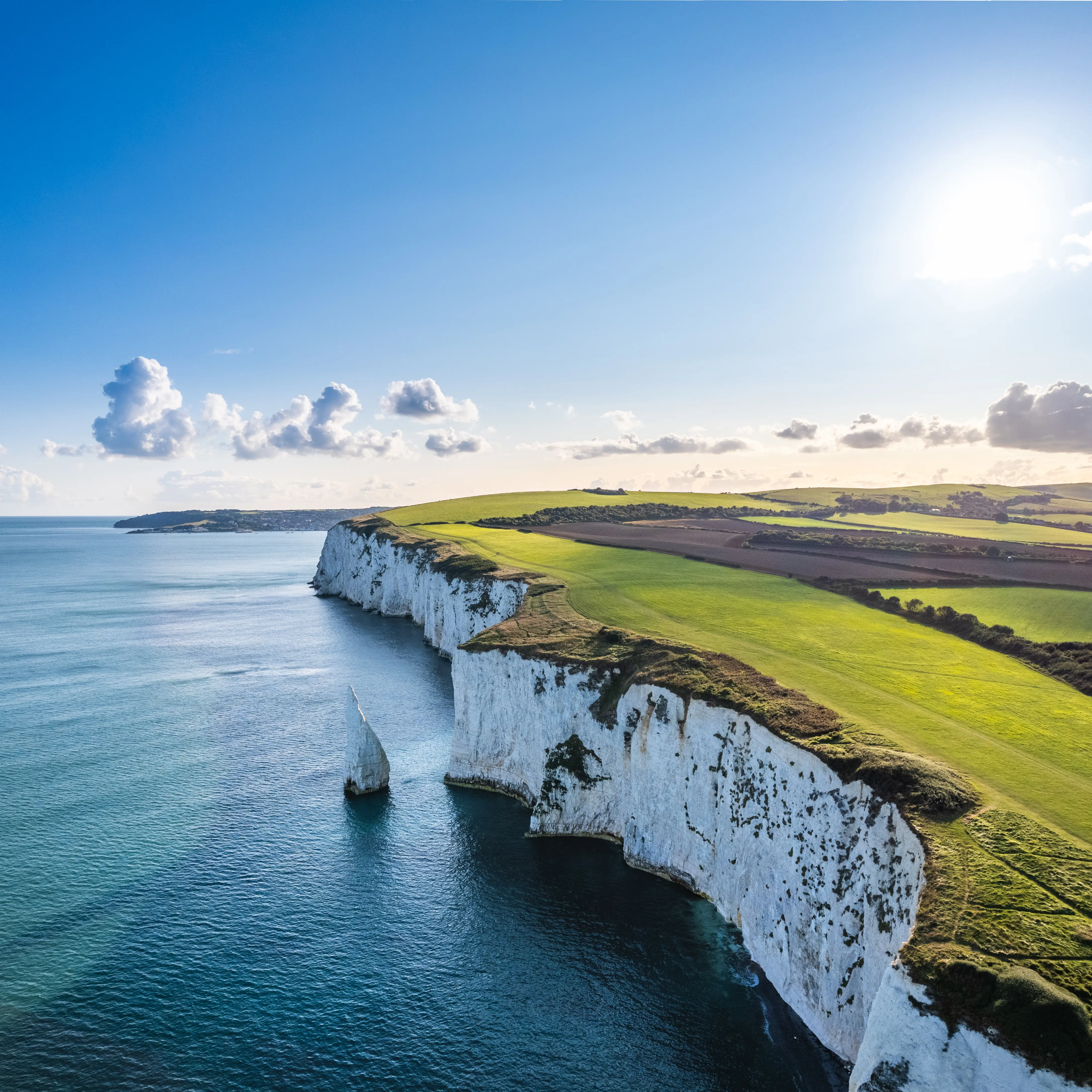
The journey to the rocks is just as enjoyable as the destination itself. Setting off from Studland village, the trail leads you briefly through a shaded, atmospheric woodland tunnel before opening out onto the sweeping, grassy clifftops. As you walk, you are treated to panoramic views on both sides. To your right, the vast expanse of the English Channel; to your left, spectacular views looking right back across Studland Bay to the Sandbanks peninsula and Bournemouth.
Wildlife on the Cliffs
Because the cliffs are undisturbed by development, they are a thriving habitat for local wildlife. The chalk face is home to nesting seabirds, including cormorants and guillemots. If you are very lucky and keep a sharp eye out, you might even spot a peregrine falcon hunting along the coastline or a pod of bottlenose dolphins playing in the surf far below.


Make it a holiday to remember!
Planning to visit Old Harry Rocks during your stay? Ensure you have the perfect coastal basecamp to return to…
From affordable local hotels to luxury beachfront apartments on the Sandbanks peninsula and family-friendly cottages in Poole, browse our hand-picked collection of premium holiday stays. Wake up to spectacular sea views and experience Dorset at your own pace.
Browse All Places to Stay